Get Full Government Meeting Transcripts, Videos, & Alerts Forever!
Get email alerts on the Castro Bars Ordinance topic
No spam. Unsubscribe anytime.
Commission backs ordinance to allow new bars in the Castro under conditional use review
Summary
The commission unanimously approved an ordinance from Supervisor Mandelmann that ends the outright ban on new bars in the Castro Neighborhood Commercial District and instead makes bar uses conditionally permitted so the community can weigh in on specific proposals.
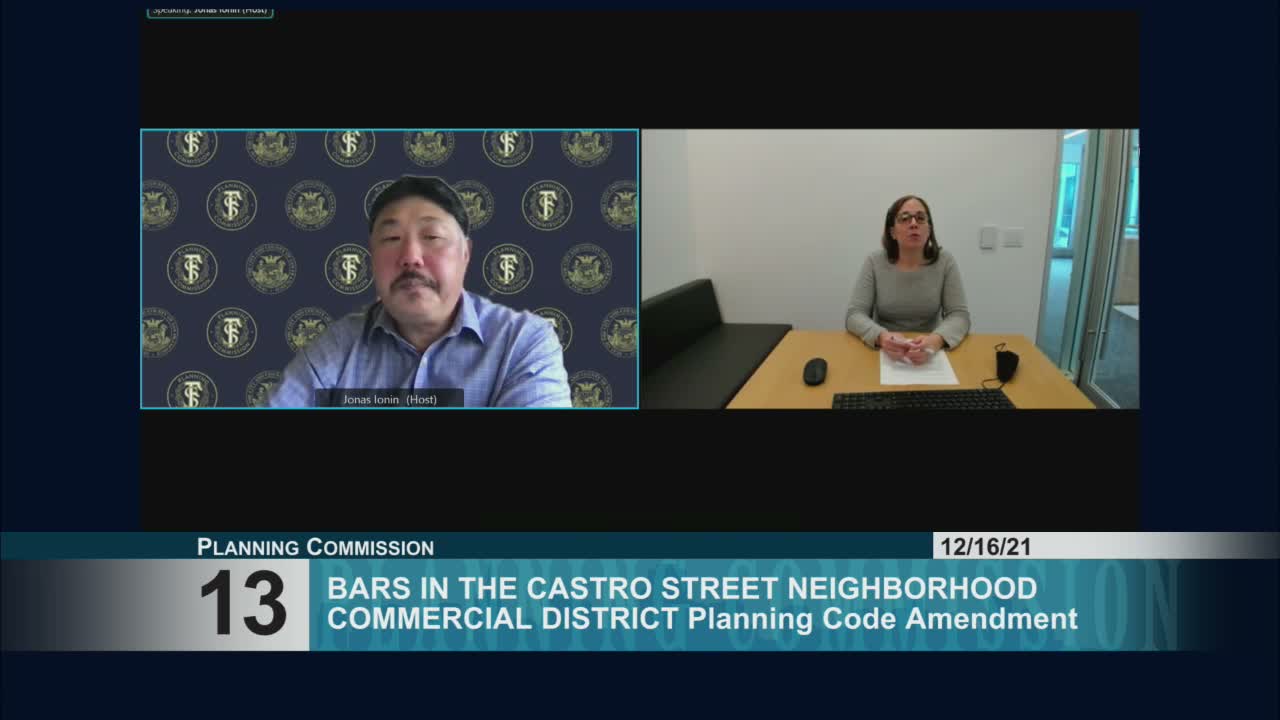
The Planning Commission voted unanimously on Dec. 16 to recommend changes that would remove an outright prohibition on new bars in the Castro Neighborhood Commercial District and make bar uses conditionally permitted.
Jacob Bentliff, representing Supervisor Mandelmann’s office, told the commission that an entrepreneur seeking to open a small wine bar in the Castro discovered that new bars are technically prohibited in the neighborhood zoning, despite many existing grandfathered bars. Bentliff said the ordinance aims to create a pathway for applicants and preserve the community’s mix of businesses: "This ordinance would remove the outright prohibition on new bars in the Castro NCD and instead make bar uses conditionally permitted," he said.
Planning staff noted that the Castro's zoning was created in 1987 and bars were prohibited then; an ordinance in 2005 made it easier for existing legal nonconforming bars to obtain permits but did not provide a path for new bars. The Department recommended approval and told commissioners the Small Business Commission had voted unanimously in favor earlier in the week.
Commissioners asked whether the ordinance includes a grandfathering or application date; staff and Bentliff replied there is no grandfathering date and the use would be available to applicants once the legislation takes effect. Commissioners approved the ordinance by roll call vote, 6-0.
Supporters said the change would allow affordable reuse of vacant storefronts and create opportunities for women- and queer-owned businesses, while preserving an opportunity for community review through conditional use authorization.