Get Full Government Meeting Transcripts, Videos, & Alerts Forever!
Get email alerts on the Land Use Permits topic
No spam. Unsubscribe anytime.
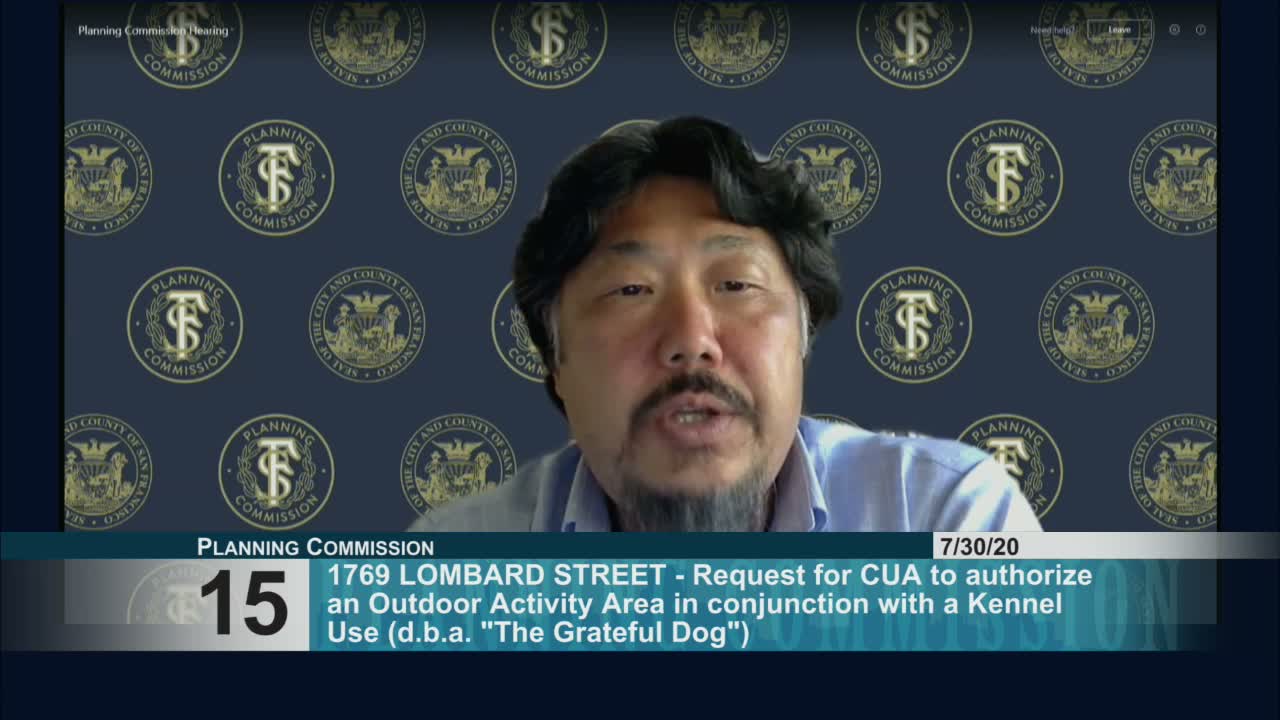
Planning Commission approves Grateful Dog rear‑yard use with conditions and reduced hours
Summary
Facing neighborhood complaints about noise, odor and yard size, the commission approved a conditional use authorization for the Grateful Dog’s rear yard with added conditions (maximum dogs, supervision, and revised hours 8 a.m.–6 p.m.) and gave staff authority to reduce outdoor dog counts after consultation with operators.
After extensive public testimony on both sides, the Planning Commission voted unanimously July 30 to approve a conditional use authorization allowing the Grateful Dog to use its rear yard as an outdoor activity area subject to additional conditions crafted in response to neighbor concerns.
Staff told the commission that since the 2018 authorization the operator had been required to satisfy several conditions and that recent follow‑up inspections and an acoustic assessment by Seltzer & Associates showed barking could be managed when staff supervise dogs. The applicant proposed additional operational limits and mitigation measures, and neighbors presented photos and video alleging non‑compliance and persistent nuisance effects.
The commission’s final conditions incorporate the department’s 2018 requirements, the operator’s proposed measures from the acoustic recommendations, and new limits agreed during the hearing: a cap of eight dogs in the rear yard (the planning department retains the authority to lower that number if complaints and verified monitoring warrant it, after consultation with the operator), additional door‑closing measures, mandated supervision of dogs while outside, and adjusted outdoor hours of 8 a.m. to 6 p.m. Commissioners cited the fragility of small businesses during the pandemic and the need to balance neighborhood quality of life with economic survival.
The unanimous vote (7–0) included the added caveat that staff would enforce conditions in coordination with the Department of Public Health and undertake follow‑up if neighbors report ongoing violations.