Get Full Government Meeting Transcripts, Videos, & Alerts Forever!
Get email alerts on the Housing Data topic
No spam. Unsubscribe anytime.
Planning Department presents 2019 housing inventory showing a rebound in production but ongoing affordability gaps
Summary
Staff reported that San Francisco added about 4,700 net housing units in 2019 (an 85% increase in construction versus 2018), with 31% of new units affordable; commissioners and public urged continued focus on affordable production and data consolidation amid COVID staffing pressures.
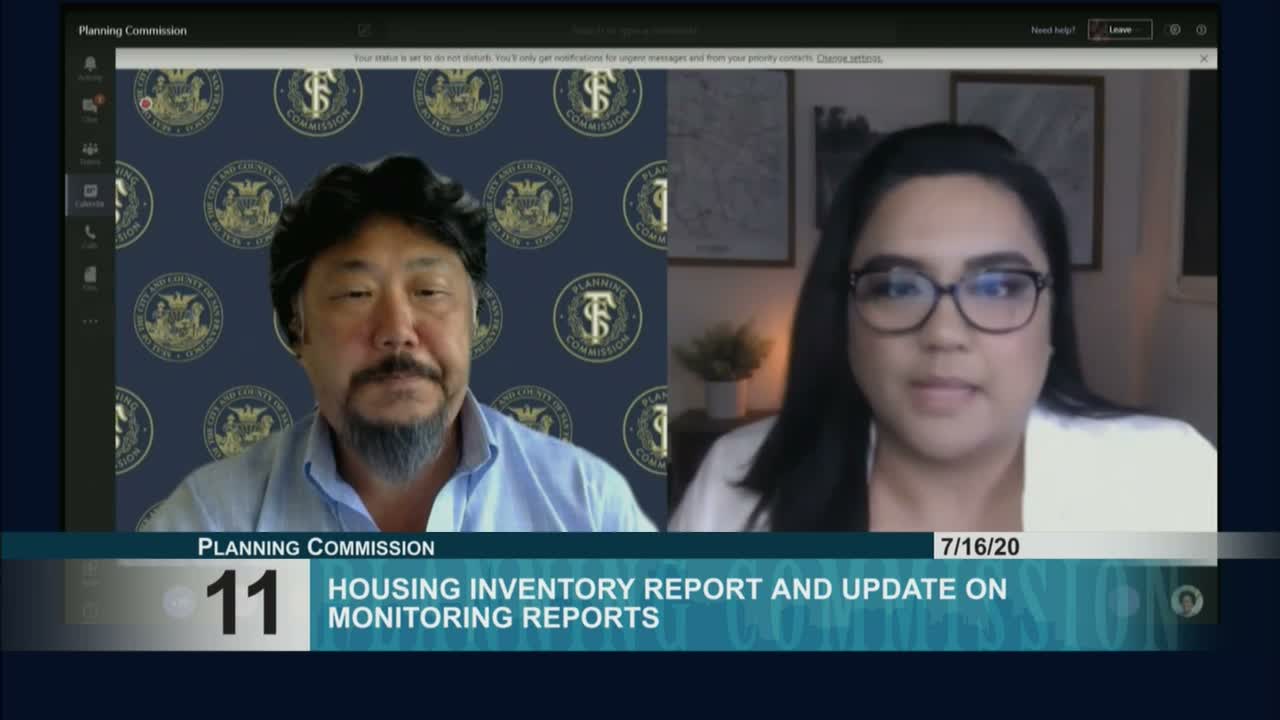
The Planning Department presented its 2019 Housing Inventory and housing balance reports to the commission on July 16, detailing a spike in construction last year but continuing shortfalls in affordable production.
Staff data showed about 4,850 units completed in 2019 and about 160 units lost to demolition or mergers, for a net addition of roughly 4,700 units — an 82% increase from 2018 and the second‑highest annual production in the last decade. About 1,456 of the new units (31%) were affordable, including 405 inclusionary units and 177 new secondary units. The department also reported that building permits issued by DBI in 2019 totaled approximately 3,000 net units, and the city had authorized roughly 3,297 units toward its RHNA obligation for 2019.
"These annual snapshots are useful to step back and see how we're doing," Peter Cohen of the Council of Community Housing Organizations told the commission, while others urged more focus on extremely low‑income production and geographic balance across districts.
Michelle Littlefield, the department’s data and analytics manager, said COVID‑19 and a hiring freeze have delayed some reporting work and prompted staff to propose consolidating several mandated monitoring reports to streamline production and reduce manual processing. Staff plan outreach this summer to interagency and community stakeholders and will present a formal consolidation proposal to the commission before the end of the year.
Commissioners thanked staff for clearer visualizations and asked for follow‑up data: the number of entitled projects that have not yet filed permits, building‑permit pipeline breakdowns by project stage, and longer‑term programmatic conclusions to help translate the numbers into policy action. Littlefield said about 1,064 net units were entitled but had not filed for building permits, and roughly 3,700 net units had filed for building permits as of the last pipeline snapshot.
The department posted the full report and underlying data on sfplanning.org and datasf.org and said it will continue to refine metrics and the geographic and equity lens of future reports.