Get Full Government Meeting Transcripts, Videos, & Alerts Forever!
Get email alerts on the Temporary Use Authorization topic
No spam. Unsubscribe anytime.
Planning Commission approves temporary permits for nonprofits and COVID-19 relief in vacant storefronts
Summary
The Planning Commission approved a code amendment creating a temporary use authorization allowing arts, cultural and social service nonprofits — including COVID-19 relief operations — to occupy vacant ground-floor commercial storefronts for up to two years with a possible two-year extension. The measure passed unanimously 7-0.
The San Francisco Planning Commission on June 25 approved a change to the Planning Code to create a new temporary use authorization (TUA) that will allow nonprofit arts, cultural and social-service organizations to operate in vacant ground-floor commercial storefronts across the city.
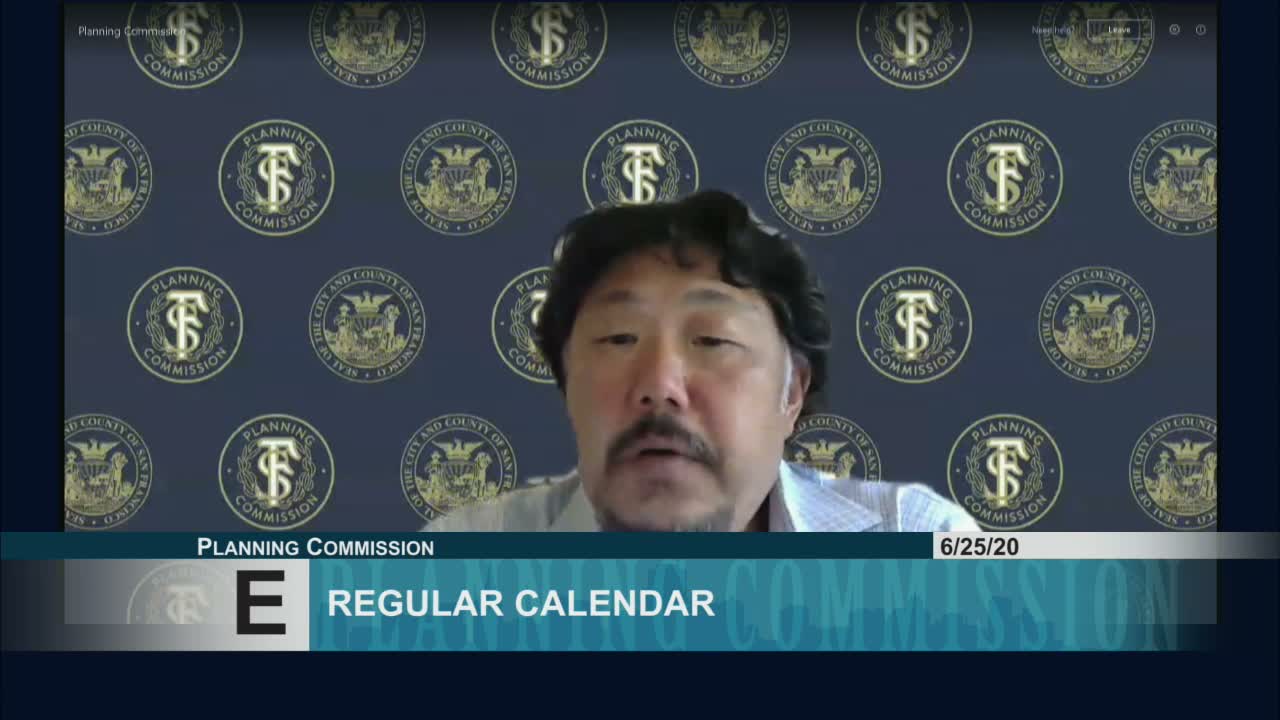
Paul Monche, legislative aide to Supervisor Hillary Ronan, described the ordinance as a targeted relief measure for nonprofits and property owners hit by the pandemic and ongoing economic stress. "This legislation before you today seeks to create an efficient solution for establishing a new temporary use permit that will make it easier for nonprofit agencies providing arts, cultural, philanthropic and social services to operate out of vacant storefront properties throughout the city," Monche said during the commission meeting.
Under the version the commission approved, an initial authorization may last two years, with the sponsoring department able to grant a two-year extension. The planning department also will be able to fast-track qualifying COVID-19 relief and recovery uses — such as food distribution, pop-up testing and direct assistance — and those uses would be eligible for a fee waiver, Audrey Marloney of the planning department told commissioners.
Commissioners expressed broad support for the ordinance and the staff-proposed amendments. Commissioner Johnson said she had long been concerned about nonprofit displacement and welcomed a flexible option for organizations to maintain a neighborhood presence. Commissioner Diamond moved to approve the code amendment as modified by staff; Commissioner Moore seconded. The motion passed unanimously, 7-0.
Why it matters: The TUA is designed to do two things at once: provide short- and mid-term space for nonprofits and social-service providers while helping property owners avoid vacant-storefront blight. Staff and the sponsor argued the measure will speed deployment of services during the COVID-19 recovery, and the fee waiver aims to reduce barriers for eligible relief providers.
What’s next: The planning department will incorporate the approved language and implement administrative procedures for application and review. The ordinance includes a staff-driven review path for determining whether a proposed activity qualifies as a COVID-19 relief or recovery use.