Get Full Government Meeting Transcripts, Videos, & Alerts Forever!
Get email alerts on the Market Octavia topic
No spam. Unsubscribe anytime.
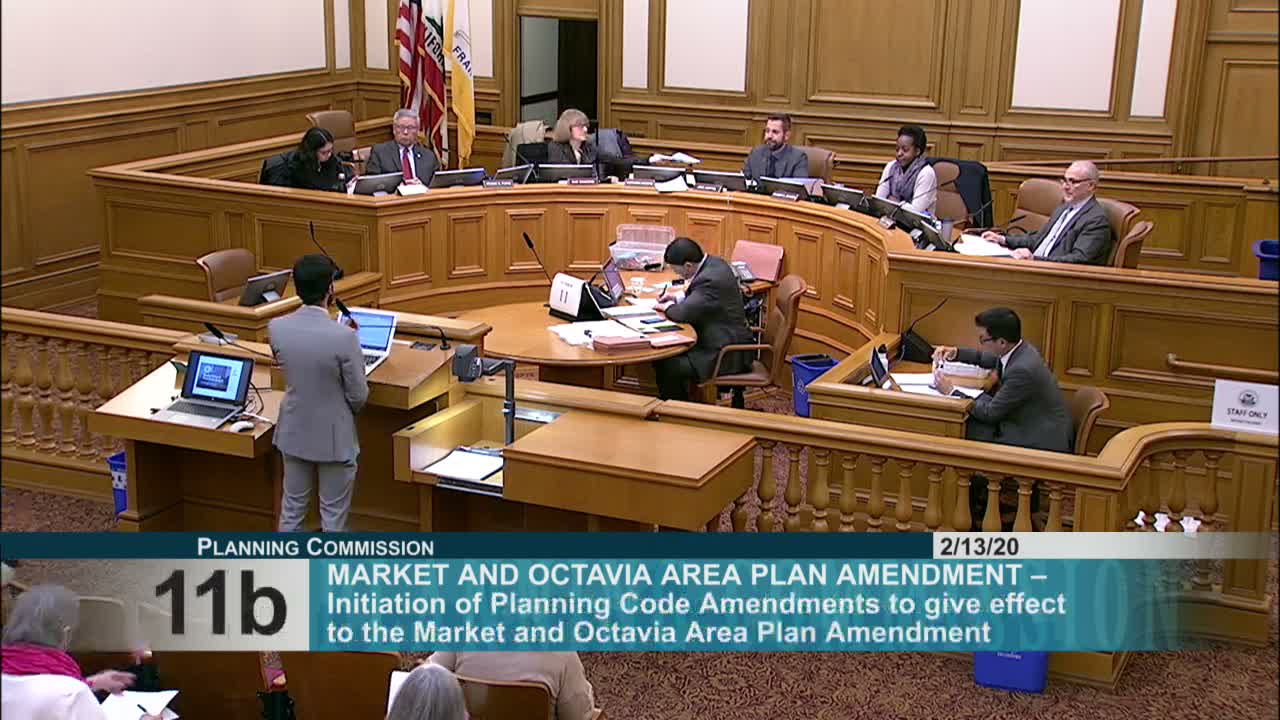
Planning Commission initiates Market/Octavia ‘Hub’ plan amid heated debate over displacement and equity
Summary
The Planning Commission voted 5–1 on Feb. 13 to initiate amendments to the Market/Octavia “Hub” area plan that would allow up to about 1,600 new homes on 18 sites, generate new impact‑fee revenues and create a Hub Sustainability District; community groups pressed for stronger racial and social equity safeguards and protections against displacement.
The San Francisco Planning Commission on Feb. 13 voted to initiate legislative amendments to the Market/Octavia area plan that would raise heights on 18 sites, add roughly 1,600 new housing units and create a Hub Sustainability District to streamline some housing approvals.
Planning Department staff, led by Joshua Suitsky and Lily Langlois, told the commission the package builds on the 2008 plan to yield more housing near transit, with an estimated additional 1,600 units and roughly $682 million in affordable‑housing resources from new development and fees. Staff said the changes could produce about 2,200 total affordable units when on‑site units and fee revenues are tallied and that impact fees could fund transit, streets, childcare and parks in the hub and adjacent neighborhoods.
The public record was extensive. Housing and planning advocates such as SPUR and the San Francisco Housing Action Coalition urged the commission to move forward, arguing the city needs new housing and infrastructure near major transit hubs. Opponents, including a Mission‑based coalition and tenant and anti‑displacement groups, said the initiative risks accelerating gentrification and asked the commission to pause until the city’s racial and social equity office and departmental implementation plans are in place. Speakers asked for clearer safeguards: anti‑displacement strategies, stronger small‑business protections, binding commitments on on‑site affordable units and more specific monitoring and enforcement mechanisms.
Commissioners threaded those concerns into the vote. Several members said staff had added an explicit equity assessment and community stabilization strategies and committed to further engagement with the Office of Racial and Social Equity, the Mayor’s office and other agencies. Commissioners asked staff to work with community groups and to give the new planning director an opportunity to meet neighborhood representatives before the adoption hearing. Commissioner Imperial cast the lone dissenting vote, saying she wanted the equity framework more fully developed and integrated before initiation.
The commission’s initiation is procedural: it schedules the matter for public hearings and directs staff to continue CEQA analysis and refine proposed mitigation. Staff said an adoption hearing would be scheduled on or after March 12, 2020 but that date would likely be moved to allow additional community engagement. The initiation vote was 5–1; the item will return to the commission with further analysis, proposed ordinance language and CEQA findings.