Get Full Government Meeting Transcripts, Videos, & Alerts Forever!
Get email alerts on the Sustainable Neighborhood Framework topic
No spam. Unsubscribe anytime.
Planning department unveils Sustainable Neighborhood Framework to tie projects to climate and resilience goals
Summary
Planning staff presented a new Sustainable Neighborhood Framework to integrate climate mitigation, resilience and equity into project review. The program offers worksheets, a strategy compendium and pilot projects and will return to the commission with a resolution after stakeholder engagement.
San Francisco — The Planning Department presented a new Sustainable Neighborhood Framework on Thursday aimed at integrating climate mitigation, adaptation and equity into project review and design.
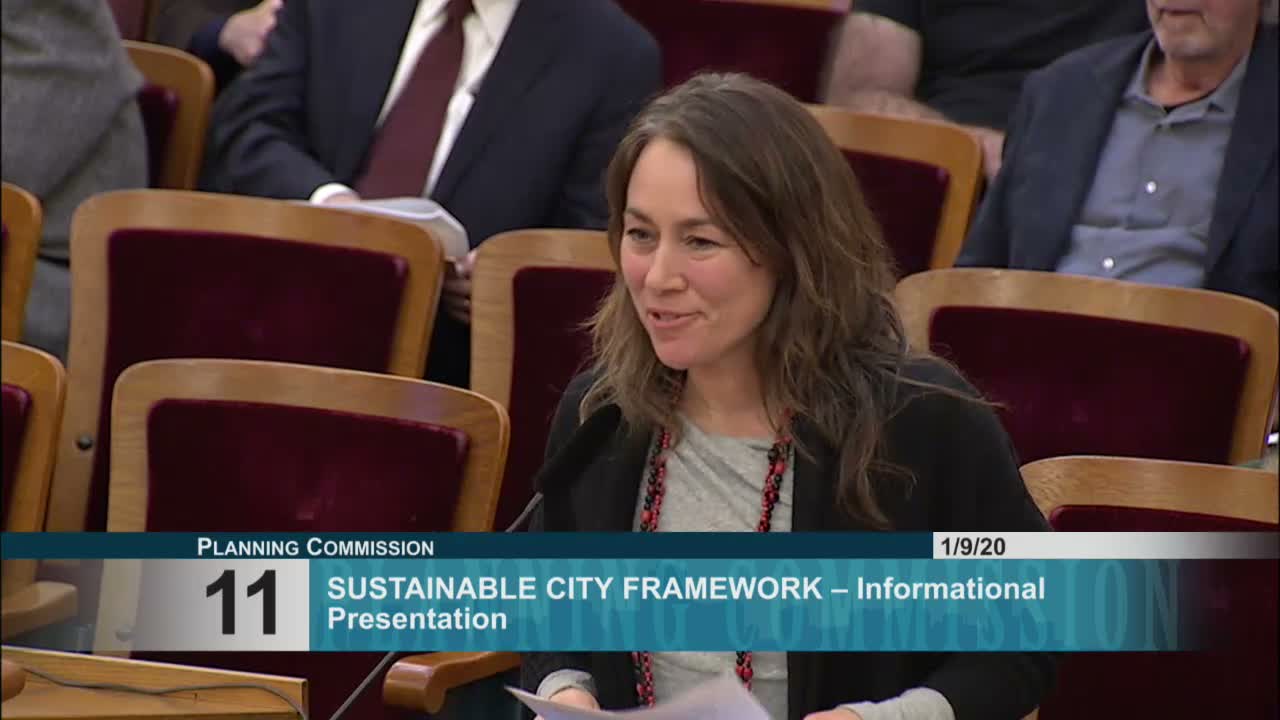
Lisa Fisher, the department’s resilience and sustainability lead, told commissioners the framework connects project‑level decisions — stormwater treatment, plantings, building systems and materials — to citywide climate targets and the climate action strategy update. “Everything we build today either supports a vibrant, healthy and future‑proof city or can accelerate global heating,” Fisher said.
The framework includes a four‑page program summary, a five‑page roadmap (one page per goal), a strategy compendium and an online guide that staff plans to make public. Pilots at Potrero Power Station and Balboa Reservoir informed the approach, staff said, and the department expects to return with a resolution in the spring after stakeholder engagement.
Public commenters from environmental organizations and community groups largely supported the approach but urged staff to explicitly link the framework to housing goals and broad community outreach. Fisher said the framework will be used at multiple project scales — from major developments to single‑family renovations — and staff emphasized the program will not duplicate existing code requirements but will summarize and elevate key targets.
Staff asked commissioners for feedback and flagged next steps including stakeholder workshops and refinement of the online guide.