Get Full Government Meeting Transcripts, Videos, & Alerts Forever!
Get email alerts on the Housing Corporate Rentals topic
No spam. Unsubscribe anytime.
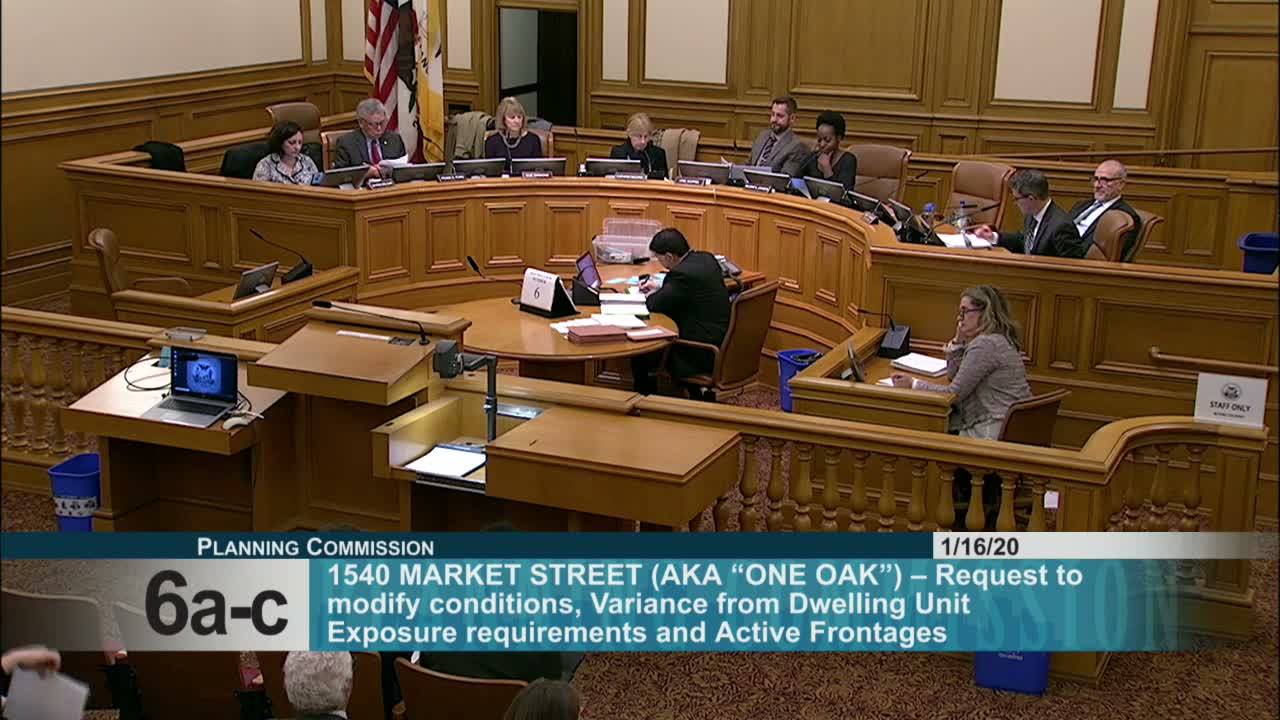
Planning Commission presses pause on proposal to regulate corporate rentals; continues ILO ordinance to Jan. 30
Summary
The commission heard hours of testimony for and against legislation from Supervisor Peskin’s office to create an "intermediate-length-occupancy" (ILO) category and curb corporate rentals in rent‑controlled housing. After extensive public comment and questions about data and enforcement, the commission voted to continue deliberations to Jan. 30.
San Francisco — The Planning Commission on Jan. 16 took up a major housing-policy proposal from Supervisor Aaron Peskin’s office aimed at limiting so‑called corporate rentals and creating a new intermediate‑length‑occupancy (ILO) land‑use category.
Sonny Angulo, legislative aide to Supervisor Peskin, framed the measure as a long‑running response to the conversion of apartments into corporate or employer‑leased units. "This legislation is really culmination of many years of the city's efforts, to try and regulate and effectively prohibit what are commonly referred to as corporate rentals," Angulo said during his presentation to the commission.
The substitute ordinance would add disclosure rules for affected units, bar leases to corporations in many rent‑controlled units, and create a conditional‑use permitting path to legalize a limited share of ILO units in new or existing buildings (staff outlined caps such as 20% for larger buildings and higher percentages for small projects). Planning staff recommended interim controls and additional study before permanent limits are adopted, citing gaps in data about the scale and location of the activity.
The hearing drew a long public record. Tenant advocates, unions and housing groups urged firm restrictions, saying corporate rentals inflate local rents and hollow out neighborhoods; labor representatives and community groups described buildings in which entire floors had been converted to temporary corporate stays. Industry speakers — managers of corporate housing and relocation firms — said the sector also houses medical patients, construction crews and disaster‑displaced families and warned that hard caps or inflexible permitting could restrict critical housing for short‑term workers and emergency needs.
Commissioners pressed staff and the sponsor on enforcement, data collection and how the measure would affect arts, health‑care and community uses. Several said the measure requires finer geographic and economic detail; staff said the ordinance directs the city controller to perform a nexus study and contemplates a two‑year amortization for some existing operators to come into compliance.
The commission unanimously voted to continue the item to the Jan. 30 meeting so members can review new material, receive the controller’s analysis and hold further outreach. Sonny Angulo said the pause was expected and that staff will use the extra time to refine enforcement language and outreach plans.
Next steps: the commission will revisit the substitute ordinance at its Jan. 30 meeting and will decide whether to forward a formal recommendation and any amendments to the Board of Supervisors.