Get Full Government Meeting Transcripts, Videos, & Alerts Forever!
Get email alerts on the Balboa Reservoir Eir topic
No spam. Unsubscribe anytime.
Public raises wide-ranging concerns about Balboa Reservoir draft subsequent EIR as commission opens comment period
Summary
The Planning Commission opened public comment on the Balboa Reservoir draft subsequent EIR. Staff described two development options (developer proposal ~1,100 units; additional housing option ~1,550 units). Dozens of speakers – students, City College representatives, neighborhood groups and housing advocates – urged revisions on parking, transit impacts, noise, air quality, and consideration of City College as a sensitive receptor.
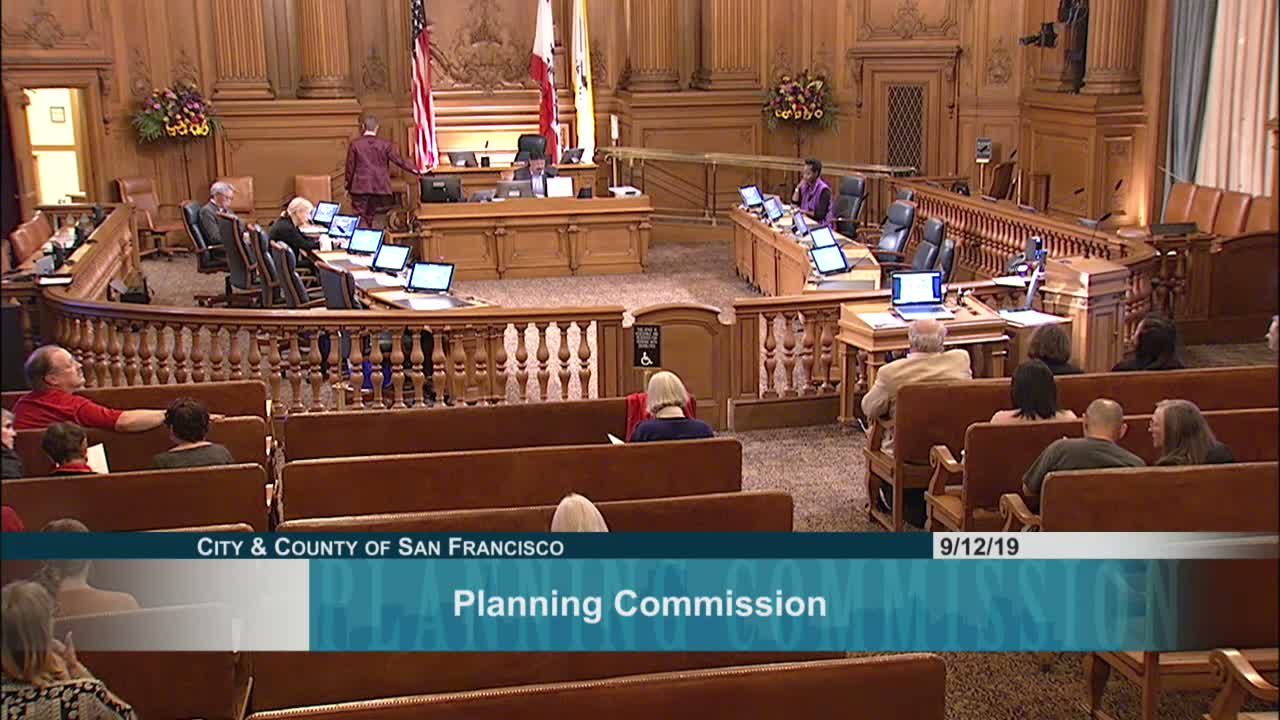
The Planning Commission opened public comment Thursday on the Balboa Reservoir draft subsequent environmental impact report (EIR), and dozens of speakers raised concerns about transit, parking, noise, air quality and impacts on nearby City College.
Planning staff described the Balboa Reservoir site as a 17‑acre parcel for which a subsequent EIR is required because the current proposal would exceed assumptions in the 2008 area plan. The draft analyzes two development options: the developer’s proposed option (about 1,100 dwelling units plus a public parking garage) and a city-developed “additional housing” option (about 1,550 units with no public parking garage). Staff told the commission the draft identifies three significant and unavoidable construction impacts (construction noise and regional and localized air quality during an approximately three‑year construction schedule) and two significant operational transportation impacts related to loading on Lee Avenue and cumulative transit delays combined with City College growth.
The public comment period for the draft was set to remain open through 5 p.m. on Sept. 23, 2019; staff said all oral and written comments will be transcribed and responded to in a later responses-to-comments document.
Speakers included students and faculty from City College of San Francisco, neighborhood association representatives, labor groups, housing advocates and residents. Many City College students and staff urged the commission and consultant to treat City College and its daycare/multiuse facilities as sensitive receptors for noise and construction impacts, and to account for real-world student parking patterns and peak-period shortfalls. Jess Whitten, a City College student, said the lower lot is essential transit and parking access for many students who work and commute: “Students carpool. They work two or three jobs just to come to school,” Whitten said.
Several commenters called into question the EIR’s thresholds for transit delay, arguing that a four‑minute threshold understates the draft’s actual route-level delays and that the proposed public garage would undermine City College’s efforts to reduce car dependence. Others (including housing advocates and YIMBY groups) urged the commission to approve the project’s more housing-dense alternative and stressed the climate and equity benefits of building housing close to transit.
The commission took public testimony for several hours and closed the public record for the night; staff will compile comments and publish responses anticipated in spring 2020.
Next steps: written comments will be accepted through Sept. 23; the department will prepare and publish responses to comments and a revised EIR as required by CEQA.