Get Full Government Meeting Transcripts, Videos, & Alerts Forever!
Get email alerts on the Permitting Process topic
No spam. Unsubscribe anytime.
Planning Department reports speed gains but commissioners press for more data and quicker early review
Summary
Staff described steps taken under the mayor’s 2017 directive to shorten housing-permit timelines (consolidated review, online submittal, historic-resource pilot), while commissioners and public speakers urged faster early steps and clearer performance data by project type.
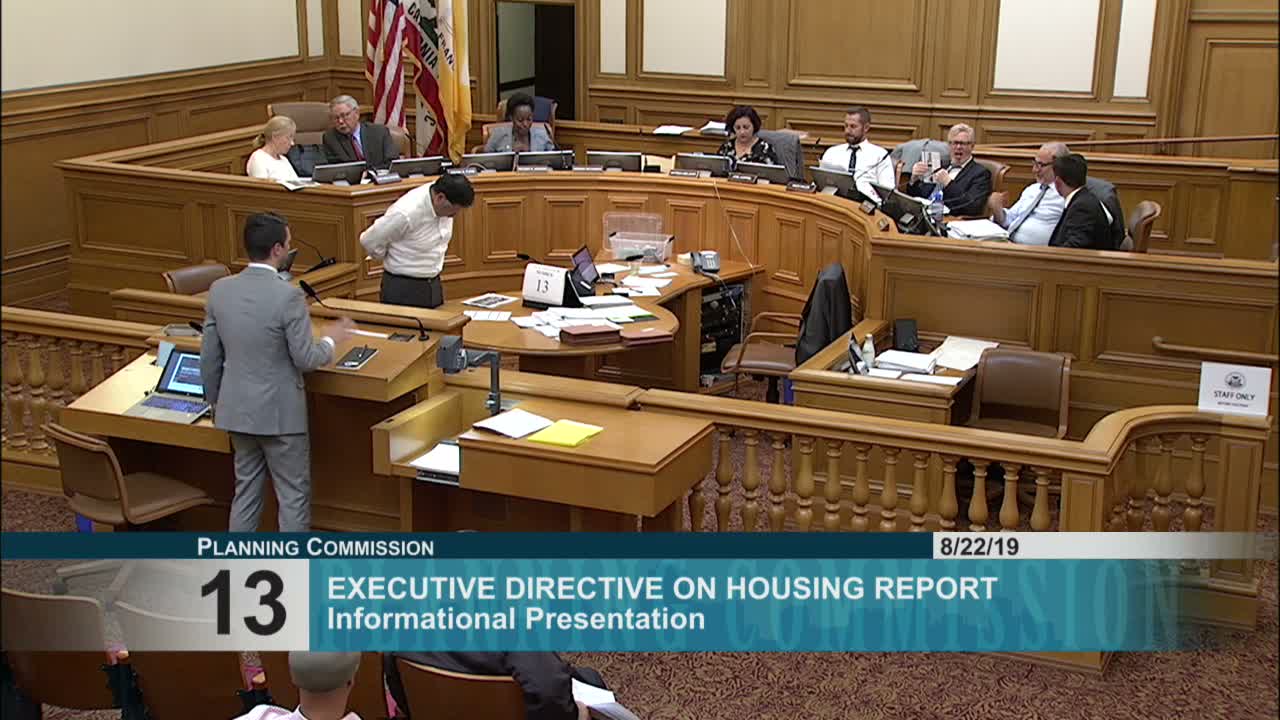
Planning Department staff on Aug. 22 told the Planning Commission that a consolidated review process and new online tools have moved average timelines in the department’s favor, but that continued applicant revisions and complex environmental review still delay many projects.
"We moved our time frame down to 60 days from 90 days for preliminary project assessment; on average we're at 62 days," said Jacob Bentliff, a department planner who outlined targets for application completeness, plan‑check response, historic resource pre‑applications and other measures implemented since 2018.
Bentliff said most internal targets are being met on average (preliminary review ~62 days; completeness checks ~18 days; plan‑check ~79 days average) but that a substantial share of projects remain paused because applicants and staff are still ironing out stable project descriptions and design details before environmental review can start.
Public comment echoed that view. "You need to consolidate some of those early requirements — get the PPA down to 30 days and shorten plan‑check for CEQA-exempt projects," said a longtime development practitioner who identified himself during public comment. Community members and older advocates urged stronger public‑facing notices and tools to reach monolingual residents.
Commissioners asked for project-level metrics (how many projects require Commission approval, average times by CEQA category) and for staff to provide follow-up reports showing where the bottlenecks remain. Staff said it will return with more detailed data and noted the city is preparing a new permit center at South Van Ness to speed customer service and co‑locate departments.
Next steps: staff will bring follow-up data to the Commission, continue pilot historic-resource assessments and proceed on standard mitigation packages to streamline CEQA review.