Planning Commission approves ADU rule changes to extend rent control and streamline notices
Loading...
Summary
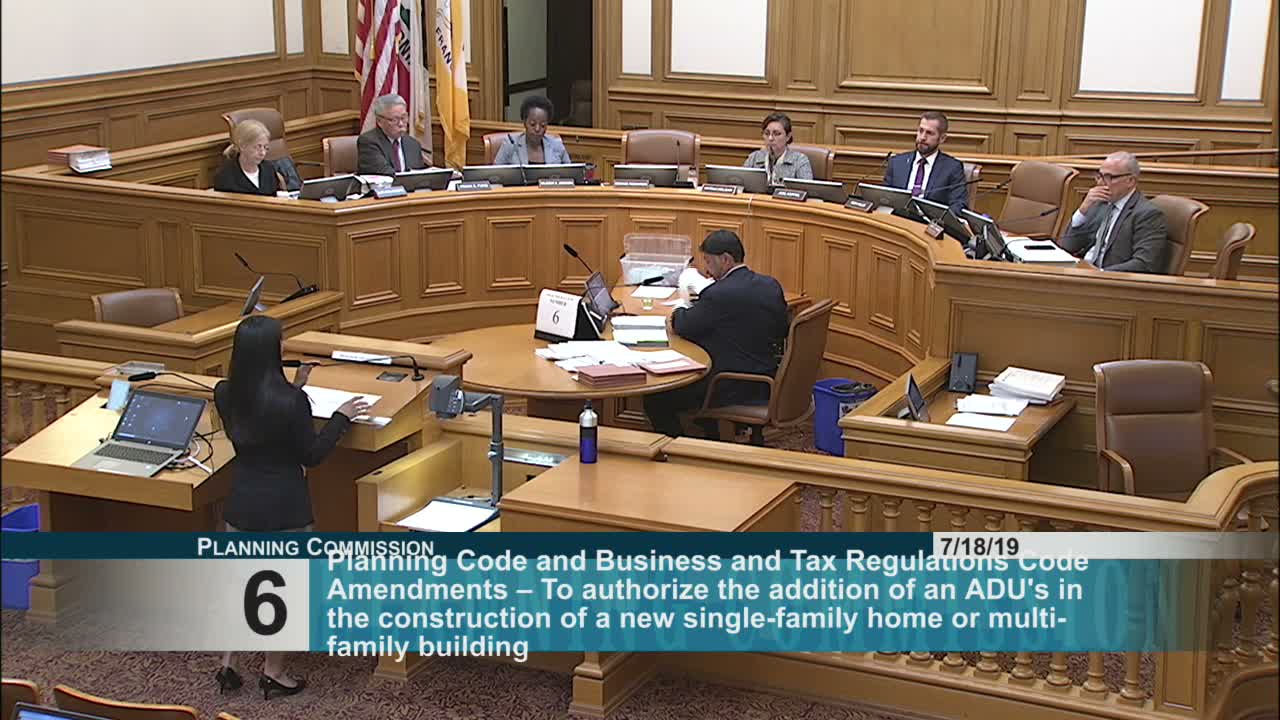
The Planning Commission voted unanimously July 18 to approve amendments allowing accessory dwelling units (ADUs) in new construction, expanding rent-control eligibility for certain ADUs and adjusting neighborhood-notification requirements, with staff-recommended modifications to align local rules with state law.
The San Francisco Planning Commission on July 18 adopted amendments to local planning and business and tax regulations to allow accessory dwelling units (ADUs) in new construction and to bring local rules into compliance with recent state law. The measure, sponsored by Supervisor Aaron Peskin and presented by Veronica Flores of the planning department, passed unanimously 5–0.
"All waiver ADUs will now be subject to rent control," Flores told the commission during a staff presentation describing the package, which also includes neighborhood-notification changes and proposed size-ratio caps for certain ADUs. Flores said the department recommends several streamlining changes, including retaining notification exemptions for minor additions and seismic-retrofit projects and eliminating the 30‑day notice for certain no‑waiver ADUs that could otherwise disrupt a 120‑day ministerial review period.
Supporters at the hearing said ADUs are a proven way to add naturally affordable housing stock. Corey Smith of the San Francisco Housing Action Coalition urged the commission not to create disincentives that would prevent homeowners from building unit additions.
Commissioners probed implementation details, in particular whether the proposed local thresholds mirrored the state’s statutory limits. Deputy City Attorney Peter Mlynich said state law does not explain how the size thresholds were chosen and that staff could research legislative history if the commission wanted background.
Several commissioners signaled support for staff modifications while voicing caution about process and local discretion. Commissioner Johnson moved to approve the ordinance with the staff’s recommended modifications; the motion passed unanimously.
What happens next: The changes will bring local practice into alignment with state ADU rules while adding local policies intended to protect tenants and preserve the streamlining gains of ministerial review. The ordinance will be implemented through subsequent department procedures and clerical revisions described at the hearing.