Get Full Government Meeting Transcripts, Videos, & Alerts Forever!
Get email alerts on the Housing Inventory topic
No spam. Unsubscribe anytime.
Planning Department: 2018 housing inventory shows sharp dip in production, large pipeline of authorized units
Summary
City planning staff told the commission the city added roughly 2,579 net housing units in 2018 (about 2,700 new units completed) — a 40% drop from 2017 — while about 23,100 units are expected to be completed in the next five years; commissioners and public pressed for more data on occupancy, entitled vs. built units, and SB 50 impacts.
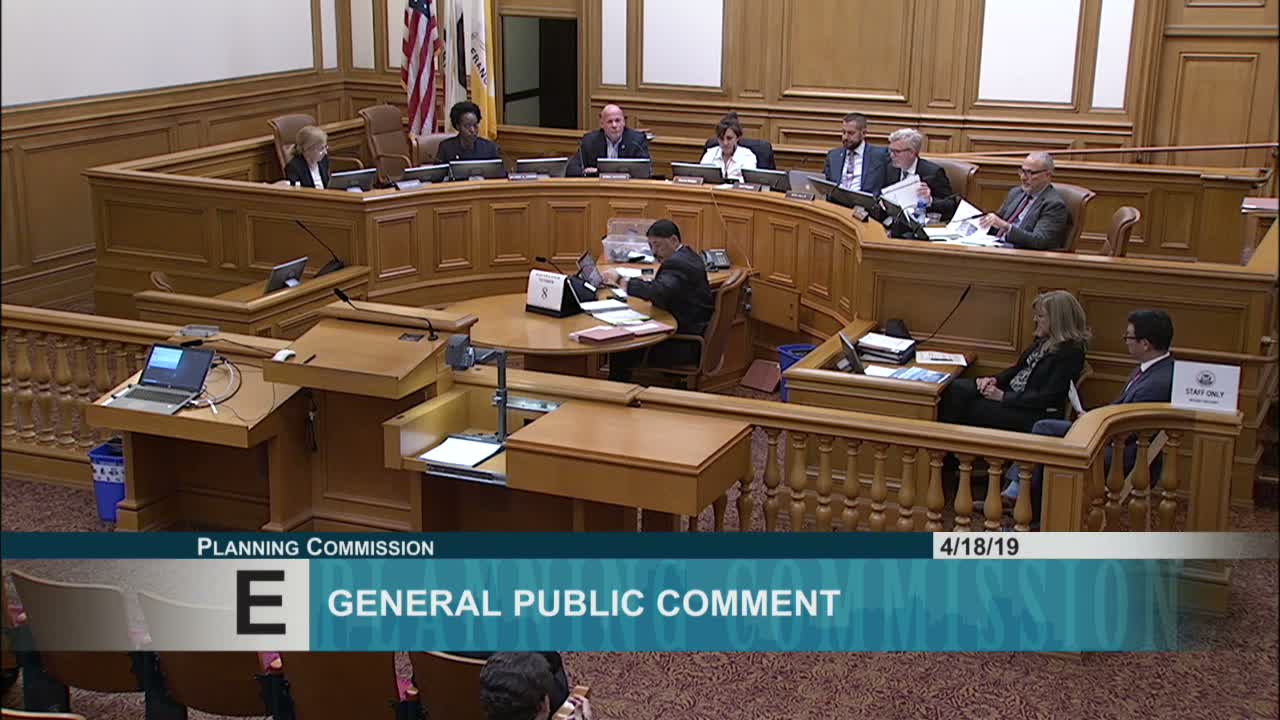
Swetha Ambati, a planner in the department's Information & Analysis Group, presented the 2018 Housing Inventory to the San Francisco Planning Commission, saying "the construction of new housing in 2018 totaled about 2,700 units," which the department described as about a 40% decrease from the prior year. Ambati told commissioners the city recorded a net addition of 2,579 units in 2018 after accounting for demolitions and other losses.
The presentation traced permit and pipeline activity: about 6,100 units were permitted in 2018, 88% for buildings with 20 or more units; roughly 8,070 net units were under construction at the end of the quarter and another 8,700 were in projects with building permits. Ambati said "about 24% of new units added to the housing stock last year were affordable," and outlined RHNA targets requiring about 28,870 units for the 2015-2022 planning period.
Terese Ohira, who added pipeline context, said the apparent 2018 production dip is partially an accounting artifact: several projects completed in 2018 had been counted in prior years' totals, and when reassigned the drop would be far smaller. She reported roughly 23,100 units in total expected to be completed over the next five years, including large phased projects such as Candlestick Point, Treasure Island and Park Merced.
Public commenters and commissioners pressed for more granular data. Cole Brennan and speakers from housing advocacy groups thanked staff but asked for clearer information on expected completion dates for entitled projects, occupancy and vacancy tracking, and the affordability mix in the pipeline. Commissioner Richards and others asked whether entitled-but-unbuilt units and building permits should be shown side-by-side with production figures; Ambati responded that state reporting requires production numbers but that permit data provide a better indicator of future construction.
Commissioners also debated causes and remedies for the downturn. Several members said rising construction costs, labor shortages and materials price spikes were stalling projects; Commissioner Moore pointed to funding gaps on projects such as Treasure Island. Commenters and commissioners discussed policy levers including upzoning sensitive infill, zoning capacity modeling, a November housing bond, and potential state-level reforms to property tax (cited as a long-term revenue opportunity). Speakers recommended tracking conversions, demolitions, and the sale prices and rents of newly created units to better understand who benefits from recent production.
The presentation packet and underlying data are available on the Planning Department website at sfplanning.org and the department's datasets on datasf.org, the presenter said. As an informational item, the commission did not take formal action on the report at the meeting; commissioners directed staff to consider follow-up material on entitled units, occupancy and zoning capacity.