Get Full Government Meeting Transcripts, Videos, & Alerts Forever!
Get email alerts on the Temporary Use Authorization topic
No spam. Unsubscribe anytime.
Planning Commission approves temporary‑use authorization to activate development sites, 5–1
Summary
The San Francisco Planning Commission voted 5–1 to approve a mayor‑sponsored planning code amendment creating a new temporary use authorization that allows interim activities on demolition/entitlement sites for an initial 36 months with possible director extensions. Supporters said it could help arts and small nonprofits; critics pressed for clearer equity and public‑benefit safeguards.
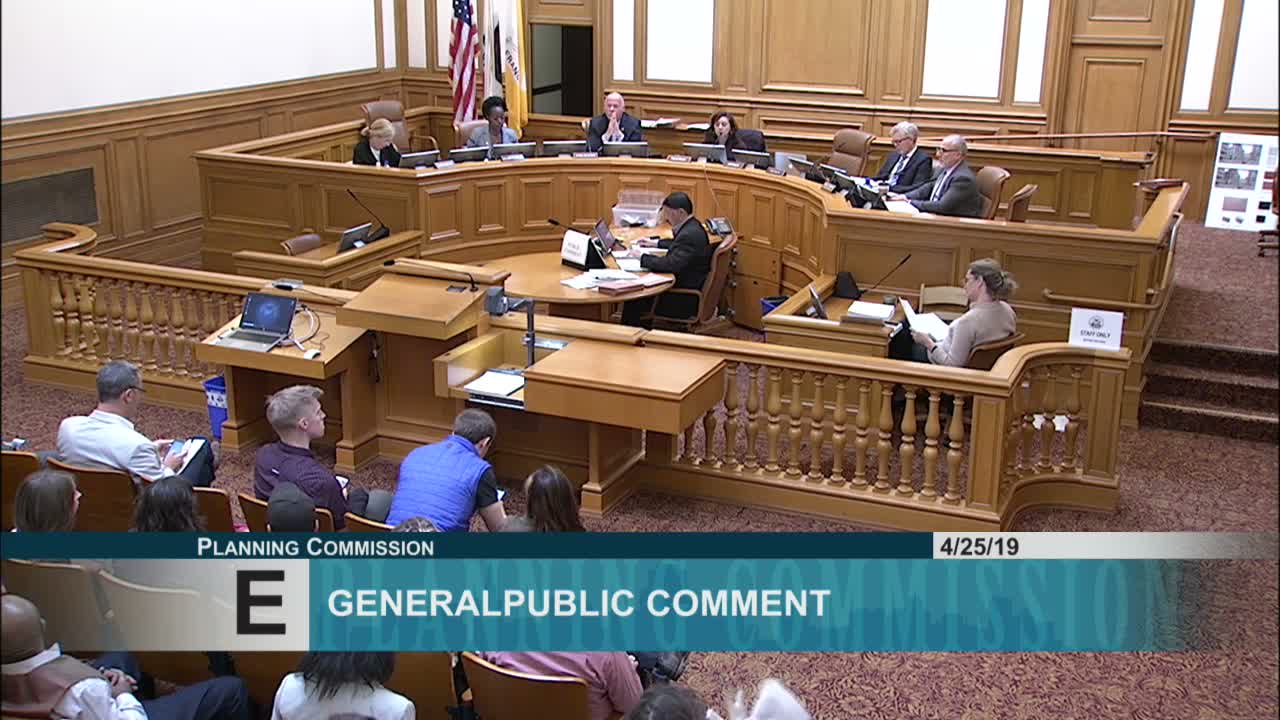
The San Francisco Planning Commission on April 25 approved a mayor‑sponsored amendment to the planning code to authorize temporary uses on development sites, a change backers say will help activate vacant properties and give artists and small nonprofits low‑cost spaces during long entitlement periods.
Planning Department staff presented the ordinance as a new type of temporary use authorization (Section 205) that would permit so‑called intermittent activities on eligible development sites for an initial period of up to 36 months, with the planning director able to extend a permit up to three additional 12‑month terms. To qualify, a site must be in specified commercial or mixed‑use districts, have submitted required demolition or tantamount‑demolition entitlements and CEQA submittals, and—staff recommended—have submitted all associated project permits and fees.
Audrey Buckas, planning department staff, told commissioners the department supports the concept but recommended two modifications: require an increase in residential density only when there is existing residential on the site, and clarify that allowed retail uses fall under the retail sales and service use chart rather than any retail‑labeled code entry. The staff report also lists a wide range of potential interim uses, including entertainment, arts and recreation, social services, homeless shelter use, light manufacturing, and limited office uses tied to arts or light‑manufacturing space commitments.
Public commenters who work in the arts and neighborhood economic development urged approval with safeguards. Ben Bridal, president of the California Music and Culture Association, said the measure could give performers and small venues temporary opportunities that are otherwise disappearing. Peter Papadopoulos of the Mission Economic Development Agency supported activation but asked how the city would prioritize community‑serving uses rather than letting spaces go to the highest bidder.
Several commissioners asked for more clarity on process and public outreach. Commissioner Moore pressed why the ordinance did not prioritize uses of clear public benefit, such as emergency shelter, and raised concerns about director discretion and notice to affected neighborhoods. Staff and other commissioners said the economics and the physical condition of many slated‑for‑demolition sites will limit high‑end tenants and that the director‑review mechanism will include checks when permits are renewed.
Commissioner Hillis moved adoption with the staff modifications; the motion passed 5–1, with Commissioner Moore voting no.
What happens next: the ordinance approved by the commission will be forwarded for the next steps in the city process; staff said they will return with implementation details and forms explaining criteria and procedures for applicants.
Speakers quoted in this report include Audrey Buckas, Planning Department staff; Ben Bridal, California Music and Culture Association; and Peter Papadopoulos, Mission Economic Development Agency.