Get Full Government Meeting Transcripts, Videos, & Alerts Forever!
Get email alerts on the Academy Imp topic
No spam. Unsubscribe anytime.
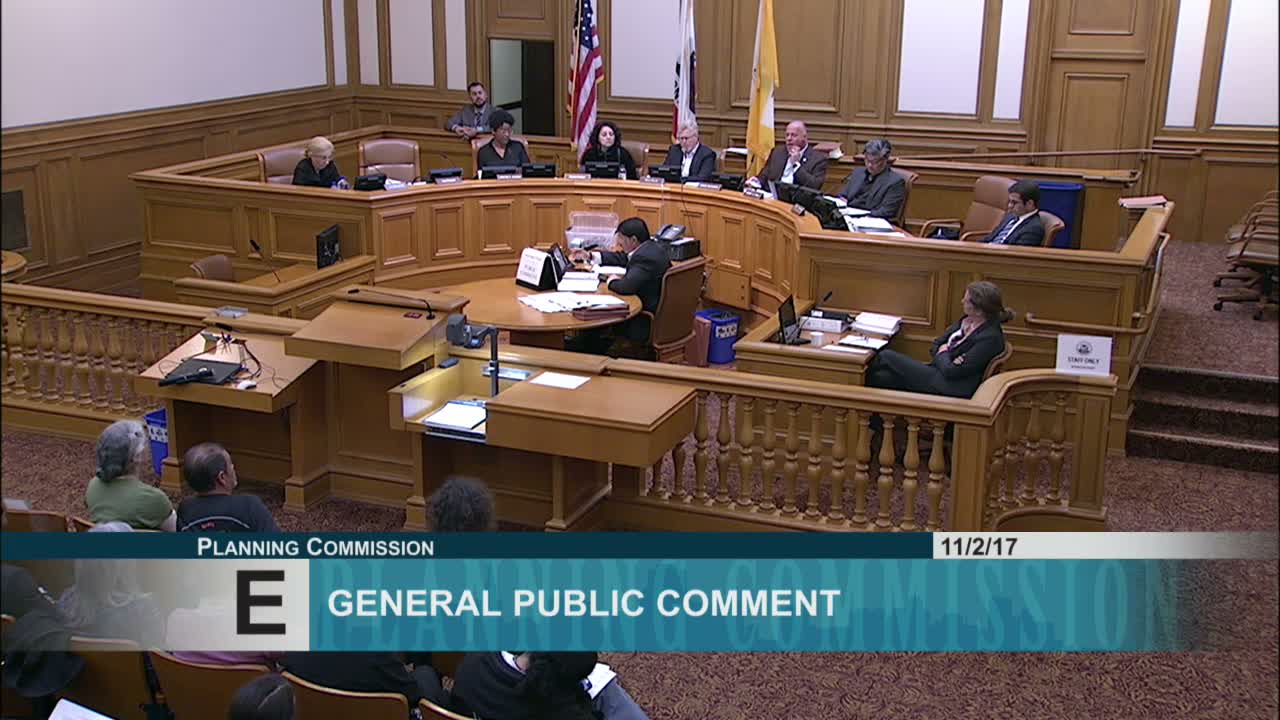
Planning Commission delays Academy of Art University master plan, asks for more detail
Summary
Facing extensive public opposition and commissioner questions about housing, enforcement and environmental review, the Planning Commission continued the Academy of Art University Institutional Master Plan (IMP) indefinitely to allow staff and AAU to reconcile the IMP with settlement and development‑agreement details.
The San Francisco Planning Commission on Nov. 2 heard hours of public comment and detailed questioning about the Academy of Art University’s Institutional Master Plan, then voted unanimously to continue the matter so staff and the university can supply clearer enrollment, housing metering and ground‑floor use details.
Staff told commissioners the IMP (planning code §304.5) documents AAU’s existing properties and intended campus consolidation and that an addendum to the certified environmental impact report (EIR) and a development agreement (DA) remain to be completed. AAU counsel Corinne Quigley said the school’s enrollment has fallen from a 2011 peak and that a metering formula in the settlement ties future enrollment to new student housing. The university said it expects to meet early housing benchmarks and to add student beds by converting one hotel on Van Ness.
Neighborhood groups, tenants’ organizations and residents pressed the commission for more assurances on four subjects: (1) that AAU would not continue to occupy or convert rent‑controlled housing without clear mitigation, (2) the reliability of AAU’s enrollment and bed‑count projections, (3) how properties acquired after earlier environmental work would be handled, and (4) the details of the metering trigger that links enrollment growth to housing delivery. Speakers included representatives of the Coalition for San Francisco Neighborhoods, Senior and Disability Action, North Beach tenants, and the Venice Corridor Neighborhood Coalition.
Commissioners sought legal and procedural clarification from staff and the city attorney about how the IMP relates to the EIR, the sites technical memorandum (ESTM), the term sheet and the DA. Staff and the city attorney explained that (a) the commission may accept an IMP as an informational document, (b) CEQA addenda and DA terms still must be completed to legalize or approve individual projects, and (c) the planning code imposes a three‑month interval after IMP acceptance before conditional‑use authorizations can proceed unless the DA modifies that timing.
Commissioner comments focused on two tensions: public concern about past AAU practices (use of former housing and hotels for student beds) and the city’s interest in locking in mitigation from the settlement (metered housing and affordable units). Several commissioners said the IMP as filed was “thin” on measurable commitments and requested specific clarifications — on ground‑floor uses, occupancy and ownership of individual sites, the exact metering percentages and triggers, and whether additional properties had been acquired since the EIR/ESTM baseline.
Rather than accept the IMP at this time, the commission voted to continue the hearing indefinitely so AAU and staff can supply the requested details and align the IMP with the DA and pending environmental addendum. The motion passed unanimously. The planning director said staff will re‑notice the matter once those items are ready to return to the commission.
Next steps: staff will compile the list of items commissioners requested, AAU will be asked to provide the enrollment and bed‑count substantiation and to explain how recently acquired properties are treated in the EIR/addendum, and the DA and environmental addendum will be advanced before the commission takes any conditional‑use or project approvals on AAU properties.