Get Full Government Meeting Transcripts, Videos, & Alerts Forever!
Get email alerts on the Small Business Streamlining topic
No spam. Unsubscribe anytime.
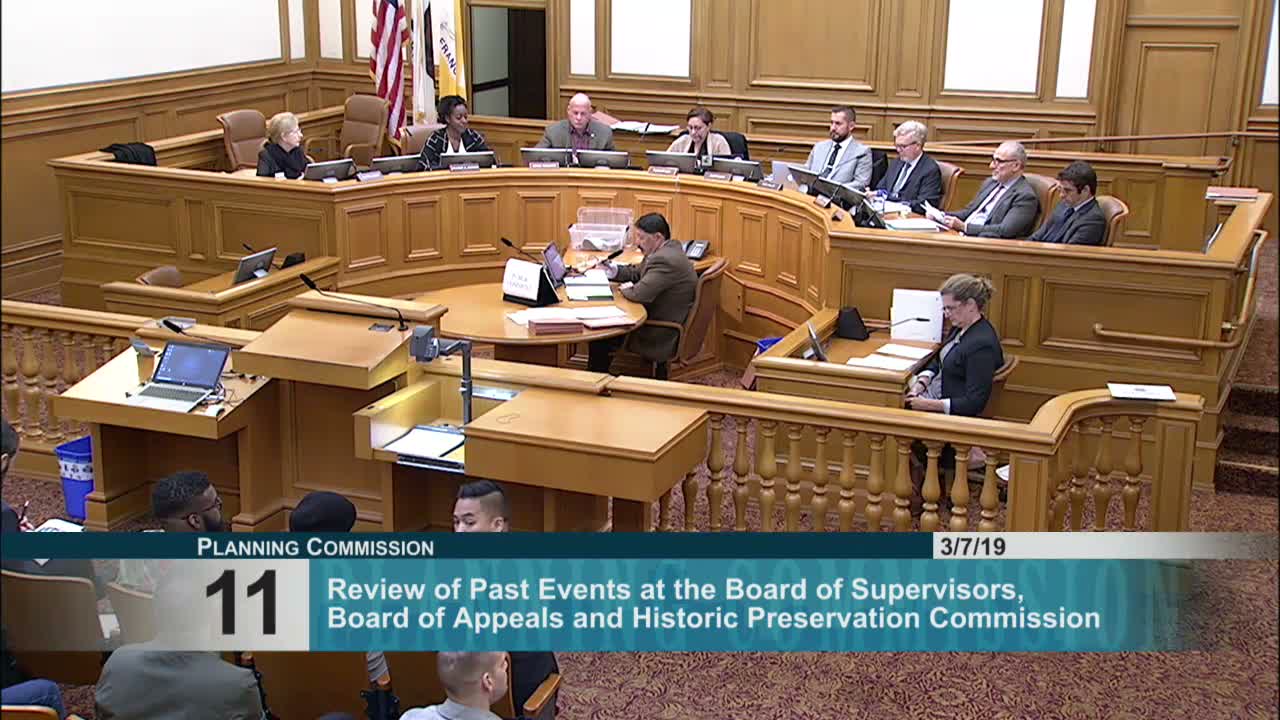
Planning Commission backs code changes to help small storefronts, narrows outdoor-bar exemption
Summary
The Planning Commission advanced a multi-part package to streamline permits for small businesses and allow more flexible uses of neighborhood storefronts, but commissioners added a conditional-use requirement for outdoor bar uses after concerns about noise and enforcement.
The San Francisco Planning Commission advanced a package of planning, health and police code changes aimed at helping small businesses navigate permitting and fill vacant storefronts, but added a carve-out to require conditional-use review for outdoor bar uses.
The measure, presented March 7 by Ben Van Houten of the Office of Economic and Workforce Development and planning staff, bundles four themes: align local health requirements to permit ‘to‑go’ retail food offerings; broaden limited live‑entertainment permits to non‑food businesses; make many rear and rooftop outdoor activity areas principally permitted (6 a.m.–10 p.m.) subject to neighborhood notification; and relax stacked quarter‑mile NC1 buffers that can block new small businesses in tightly layered commercial districts. Staff said the changes respond to a retail-sector study and the Planning Department’s Neighborhood Commercial District report and are intended to reduce time and cost for small entrepreneurs.
Supervisor Catherine Brown and multiple neighborhood merchant groups and business associations testified in strong support, saying the city needs easier paths for mom‑and‑pop retailers, family‑oriented arcades and small entertainment venues to survive rising rents and lengthy permitting.
Commissioners agreed on the overall direction but raised concerns about the outdoor‑activity proposal: several members said making back‑patio and rooftop outdoor areas principally permitted could leave neighbors without adequate remedies when amplified sound or late‑night activity became a nuisance. Commissioner Richards, who described personal experience with a disruptive patio, pressed for stronger enforcement tools. After debate, the commission rejected an amendment that would have limited outdoor non‑amplified entertainment and restricted outdoor bars (2–4) but then approved a subsequent amendment requiring conditional‑use authorization for outdoor bar uses (5–1), preserving easier pathways for many small businesses while reserving heightened review and enforcement mechanisms for alcohol‑focused operations.
The ordinance includes a neighborhood‑notification component for outdoor activity areas, options for discretionary review where appropriate, and a set of technical cleanups to align planning, health and police code definitions. Planning staff flagged that the changes will be coordinated with district supervisors and that additional rule‑making would be needed for some liquor‑license and amplified‑sound provisions.
What happens next: The Planning Commission’s recommendation will be transmitted to the Board of Supervisors for final action. The Board will consider the commission’s amendments, including the conditional‑use requirement for outdoor bar uses. Supporters said the package should reduce barriers for small businesses; critics and some commissioners urged careful monitoring to ensure neighbors retain meaningful enforcement options.