Get Full Government Meeting Transcripts, Videos, & Alerts Forever!
Get email alerts on the Budget topic
No spam. Unsubscribe anytime.
Planning Department presents cautious two‑year budget, warns of fee revenue drop
Summary
Planning staff told the commission the department expects lower fee revenue and application volume in 2019–20, proposes no new positions per mayoral guidance, and flagged a roughly $1 million reduction in charges-for-services; staff also reiterated priorities including housing, homelessness and accountability.
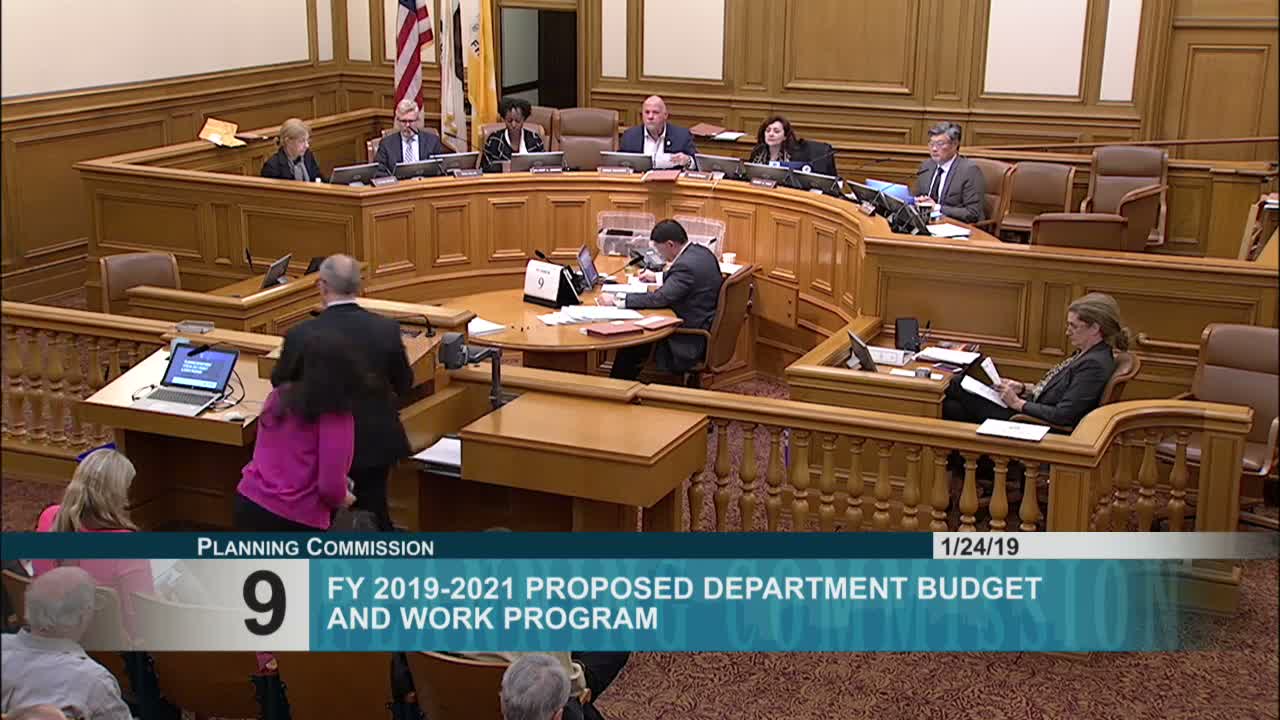
The San Francisco Planning Department told the Planning Commission Feb. 14 that it expects a modest decline in application volume and fee revenue for fiscal 2019–20 and proposed a two‑year work program that keeps staffing steady while trimming non‑personnel costs.
John Grama, planning staff, said the department is projecting “a drop in applications this year,” and that charges for services — the department’s principal revenue source — will be reduced by roughly $1 million from the current year to 2019–20. Deborah Landis, deputy director for administration, told commissioners the department is keeping grant revenues steady at about $2 million and is not proposing new permanent positions this budget cycle because the mayor asked departments to avoid new hires until a later review.
The department also flagged rising personnel costs: salaries and fringe benefits are about 67 percent of the current budget and are projected to rise to about 72 percent in the coming year, Landis said. Staff recommended modest reductions in contracts (about $300,000) and noted an increase in materials and supplies tied to an anticipated office move and adoption of VoIP phone technology.
Why it matters: Planning’s budget depends heavily on development fees, so a softening in applications can reduce service capacity and requires tradeoffs between enforcement, housing‑production programs and training. Commissioners pressed staff on how the department will preserve existing‑housing protections while streamlining approvals and asked for future detail on reassigning vacant positions.
Public commenters asked that the department restore or continue five‑year performance statistics in the annual report and urged funding for monitoring accessory dwelling units (ADUs), including counts of waivers and variances and whether ADUs are tenant‑occupied or used as short‑term rentals. Grama and Landis said a training line exists in the budget and that the department will fill a planner position devoted to ADU work.
Next steps: Staff will revise the budget for submission to the mayor’s office in late February; the mayor’s office will publish a proposed budget in June and the Board of Supervisors will complete review in July.