Get Full Government Meeting Transcripts, Videos, & Alerts Forever!
Get email alerts on the 1600 Jackson Wholefoods topic
No spam. Unsubscribe anytime.
Neighbors split as Planning Commission moves to continue Whole Foods/1600 Jackson debate
Summary
The commission held a daylong, often emotional hearing on a proposed Whole Foods 365 at 1600 Jackson (the Lombardi building), where supporters urged relief for a grocery‑poor corridor while opponents said the sponsor should build housing instead; the commission voted an intent to disapprove and continued the matter to Nov. 29 for further action.
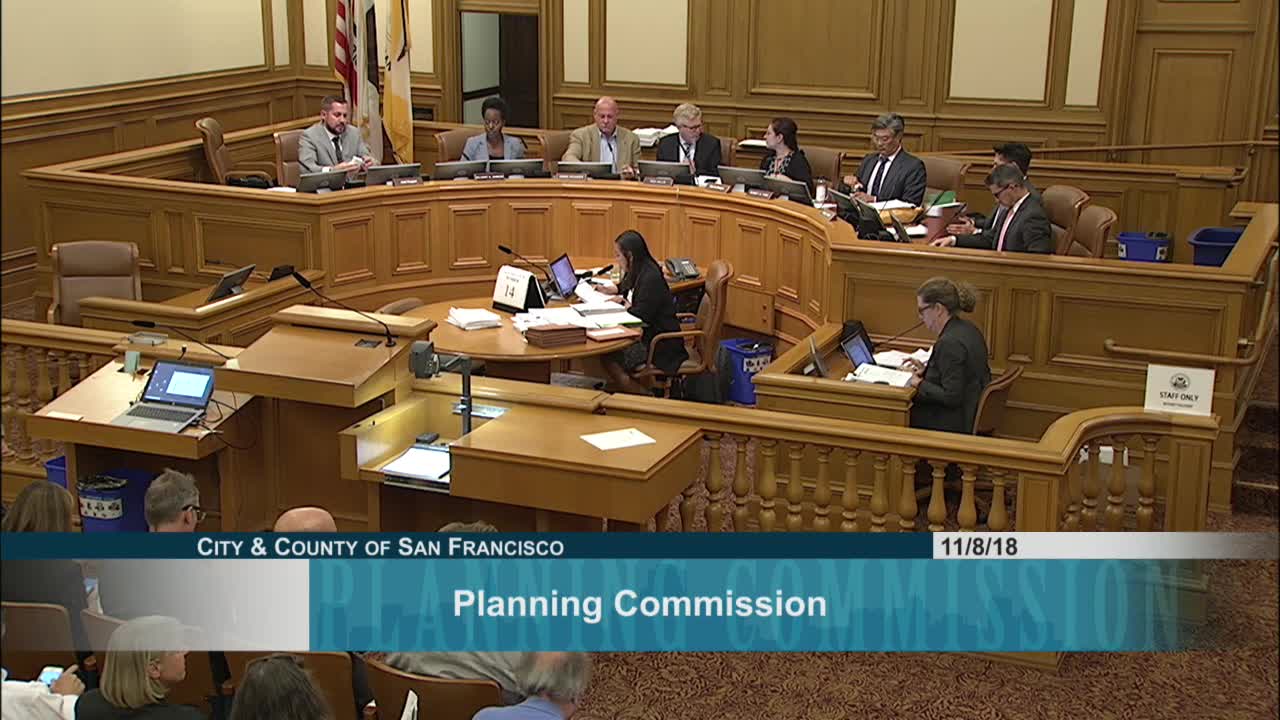
The Planning Commission heard hours of testimony and saw a revised application on Nov. 8 for a proposed Whole Foods 365 store at 1600 Jackson Street (the former Lombardi building). Sponsor counsel described changes since the prior hearing: the addition of eight second‑floor residential units, on‑site bicycle parking, and a voluntary restriction on distilled spirits sales. The sponsor also said delivery patterns and building uses had been modified in response to prior concerns.
Residents, merchants and neighborhood groups were deeply divided. Many immediate neighbors and neighborhood associations said the corridor lacks a full‑service grocery store and pushed for the Whole Foods 365 as an anchor that would revitalize Polk Street and serve walkable daily needs. They described long walking distances to existing grocers, numerous vacant storefronts on the corridor, and strong local support for a new supermarket.
A large group of merchants, neighborhood advocates and housing activists opposed the plan on several grounds: they argued the site is a transit‑rich opportunity for multi‑unit housing (estimates of 50–60 units were presented by opponents), said the 8‑unit revision was inadequate to the city’s housing crisis, and warned the formula retailer could undercut small, independent outfits and accelerate change in the retail mix. Labor and tenant advocates also raised concerns about automation, corporate practices and potential impacts on workers. Legal questions about neighborhood commercial use‑size caps (Planning Code section 121.2) were raised in public comment.
After extended public testimony, the commission moved on a formal motion of intent to disapprove and to continue the conditional‑use and related variance to Nov. 29; that motion passed 5–1. Commissioners said they welcomed grocery access for the neighborhood but were not satisfied that the proposal struck the right balance with housing and small‑business impacts, and they directed staff to pursue code‑related follow‑up options. The applicant may revise the proposal for the next hearing.
Why it matters: the decision illustrates tensions that recur across San Francisco — daily‑service retail needs vs. lost housing potential and the future of neighborhood commercial corridors. The Commission’s continuance preserves the record while buying time for additional analysis and possible revisions.