Get Full Government Meeting Transcripts, Videos, & Alerts Forever!
Get email alerts on the Cannabis Policy topic
No spam. Unsubscribe anytime.
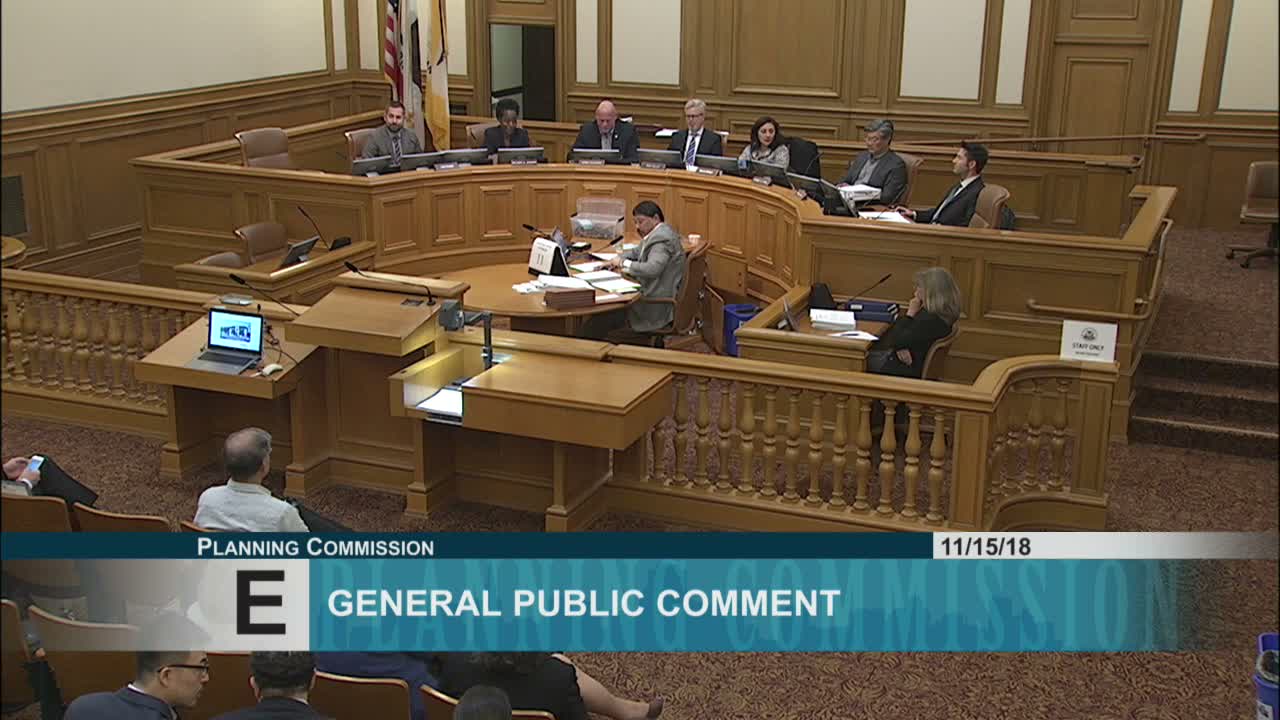
Planning Commission approves narrow changes to cannabis conversion rules amid neighborhood objections
Summary
The San Francisco Planning Commission on Nov. 15 approved amendments to planning-code section 190 to ease procedural hurdles for some medical cannabis dispensaries seeking conversion to adult‑use retail, with staff modifications; the measure passed 5–1 amid public debate about clustering and a time‑stamp selection process for equity applicants.
Commissioners on the San Francisco Planning Commission voted 5–1 on Thursday to approve amendments to planning‑code section 190 intended to ease the procedural path for certain medical cannabis dispensaries (MCDs) to convert to adult‑use retail.
The amendments, proposed by the city’s Office of Cannabis and reviewed by the Planning Department, remove a strict filing‑date cutoff and change a requirement that a site have a final Department of Public Health permit to instead rely on planning‑department approval so operators already approved by the commission can continue construction while conversion paperwork proceeds. The Office of Cannabis also proposed a narrow exemption from the 600‑foot storefront separation rule for three sites that were in active processing when the 600‑foot rule was adopted; staff recommended additional safeguards requiring conditional‑use review and an “active processing” date check.
The measure’s supporters said the changes correct rollout problems that left otherwise‑qualified businesses in limbo. Nicole Elliott, director of the Office of Cannabis, walked commissioners through the office’s work on an amnesty program, equity verification and temporary authorizations, and the scale of applications: “We have 263 business locations seeking 395 cannabis business permits,” she said during the presentation, explaining why staff wanted to remove procedural hurdles for operators who had already invested in build‑outs. Elliott added that the equity verification system is time‑consuming and that staff prioritized thoroughness for applicants lacking resources.
Industry and equity applicants urged the change. Ben Blyman, an applicant and former Entertainment Commission president, commended Elliott’s work but called the city’s “time‑stamp” approach to conflicting applications unfair: “There’s way too much at stake here to just rely on a time stamp,” he said, arguing commissioners should be allowed to consider multiple applicants for the same neighborhood rather than advancing the first‑in‑time application automatically.
Opponents — neighborhood councils, residents, and parent advocates — warned the narrow exemptions and broader changes could increase storefront clustering near homes and schools. Tess Welborn, president of the Haight‑Ashbury Neighborhood Council, urged the commission to seek changes to permit selection practices so neighborhoods could compare all qualified candidates rather than seeing the process determined by minutes or hours of difference in application timing.
Commissioners debated competing goals: avoiding “land grabs” and preserving equitable access to limited retail locations versus neighborhood concerns about clustering and youth exposure. Several commissioners praised Elliott and Planning staff for designing a cautious, equity‑oriented rollout. Commissioner Richards cast the lone no vote, saying he did not support the measure’s approach to the 600‑foot rule exemptions. Commissioner Melgar stated support for the motion while voicing concern about commercial corridor impacts and stressing the need for public‑health education alongside permitting changes.
The motion to approve the code amendment as proposed, with the Planning Department’s modifications (including requiring conditional‑use review and an explicit active‑processing date for pending MCDs), passed 5–1. The commission’s action does not automatically convert any site; each site still must satisfy notice, discretionary review and any required conditional‑use findings before a final conversion is permitted.
Staff told commissioners that some Haight and Tenderloin storefronts are already in the pipeline and that discrete conversion and discretionary‑review hearings are expected in coming months; staff also noted Haight Street items are tentatively calendared for hearings early next year.
What happens next: the ordinance amendments proceed to the Board of Supervisors/administrative process (as applicable) and the Office of Cannabis and Planning will return individual sites to the Planning Commission for conditional‑use review where required. Public comment and additional hearings will accompany any site‑level conversion requests.