Get Full Government Meeting Transcripts, Videos, & Alerts Forever!
Get email alerts on the Historic Preservation topic
No spam. Unsubscribe anytime.
Final EIR for 450–474 O'Farrell project not certified; commission continues the project after preservation and feasibility debate
Summary
After lengthy public testimony for and against a proposed mixed‑use development on O'Farrell Street that would replace an aging church building with housing and a new reading room for the Fifth Church of Christ Scientist, the Planning Commission was split and did not certify the Final EIR. Commissioners continued the matter to Sept. 13 and asked staff to supply the financial feasibility and peer review materials for detailed review, and asked for more analysis of preservation alternatives.
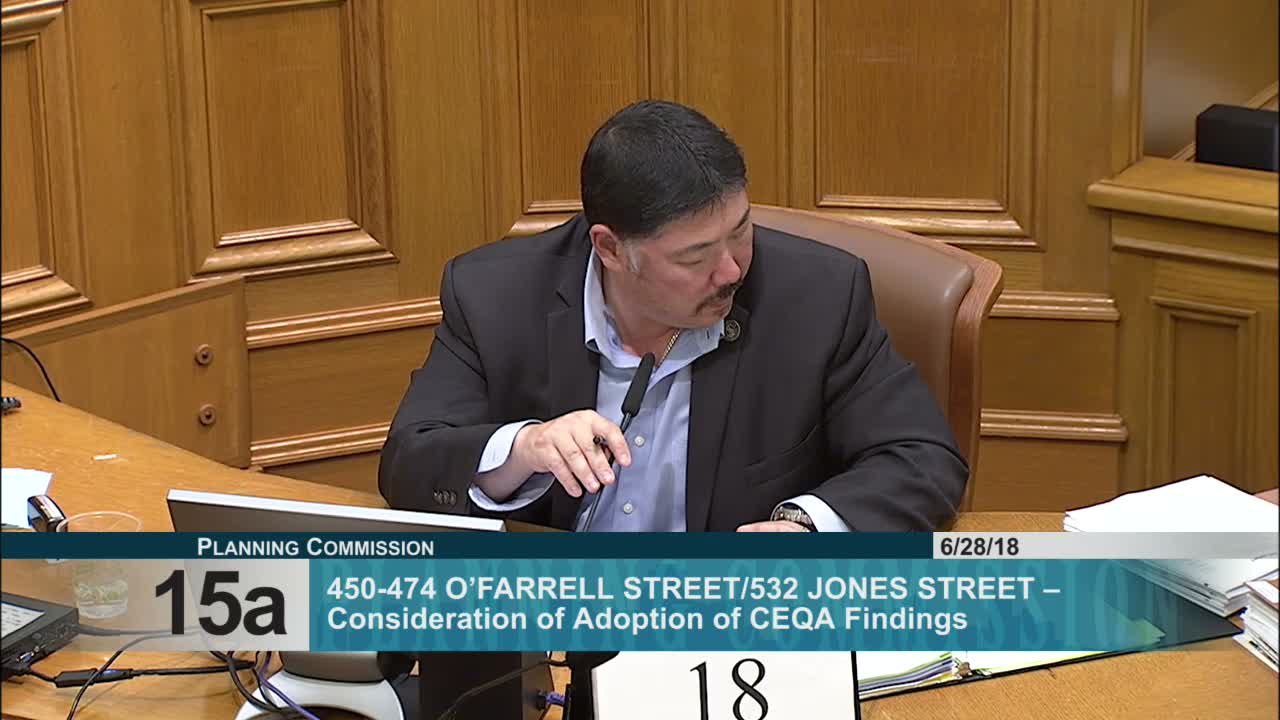
The Planning Commission did not certify the Final Environmental Impact Report (EIR) for the proposed mixed‑use redevelopment at 450–474 O'Farrell Street, a project that would replace the Fifth Church of Christ Scientist’s existing building with a new mixed‑use tower containing residential units (including BMR units), retail and a new church reading room. The hearing featured extensive public testimony both supporting and opposing the project.
Staff briefed commissioners on the Final EIR and a preferred project variant that retains the O'Farrell facade while replacing most of the structure. The preferred project would deliver more than 170 net new housing units and on‑site BMR units while incorporating a new reading room and church facilities. Planning staff concluded the preferred project remains a demolition project for CEQA purposes and identified a significant and unavoidable historic‑resource impact; staff recommended adoption with a statement of overriding considerations if the commission certified the EIR.
Preservation advocates (San Francisco Heritage, Victorian Alliance and others) urged the commission to continue the item until the finance and feasibility analyses for full or partial preservation alternatives could be fully vetted; they said the materials were only recently made available and did not consider all preservation incentives (historic tax credits, potential TDRs and local preservation funding). Supporters — including interfaith groups, tenant organizations, neighborhood representatives and community groups — urged approval for housing, neighborhood revitalization and community benefits (including set‑aside units for the city’s ‘‘moving on’’ program and funding commitments to nearby SRO tenants).
The commission voted 3–3 on a motion to certify the EIR (the motion failed), with Moore, Richards and Melgar voting no and Fong, Johnson and Coppell voting yes; President Hillis voted yes, leaving a tie that prevented certification. Commissioners then voted to continue the matter to September 13 to allow additional review of the financial feasibility reports and to permit staff and the applicant to respond to preservation concerns. Staff committed to distributing the financial analyses and peer review materials for the commission's consideration.
The continuation preserves the record and gives the commission more time to weigh preservation alternatives, EIR findings and the developer’s commitments to BMR units and neighborhood mitigation before any final decision on certification or project approval is made.