Get Full Government Meeting Transcripts, Videos, & Alerts Forever!
Get email alerts on the Central Soma topic
No spam. Unsubscribe anytime.
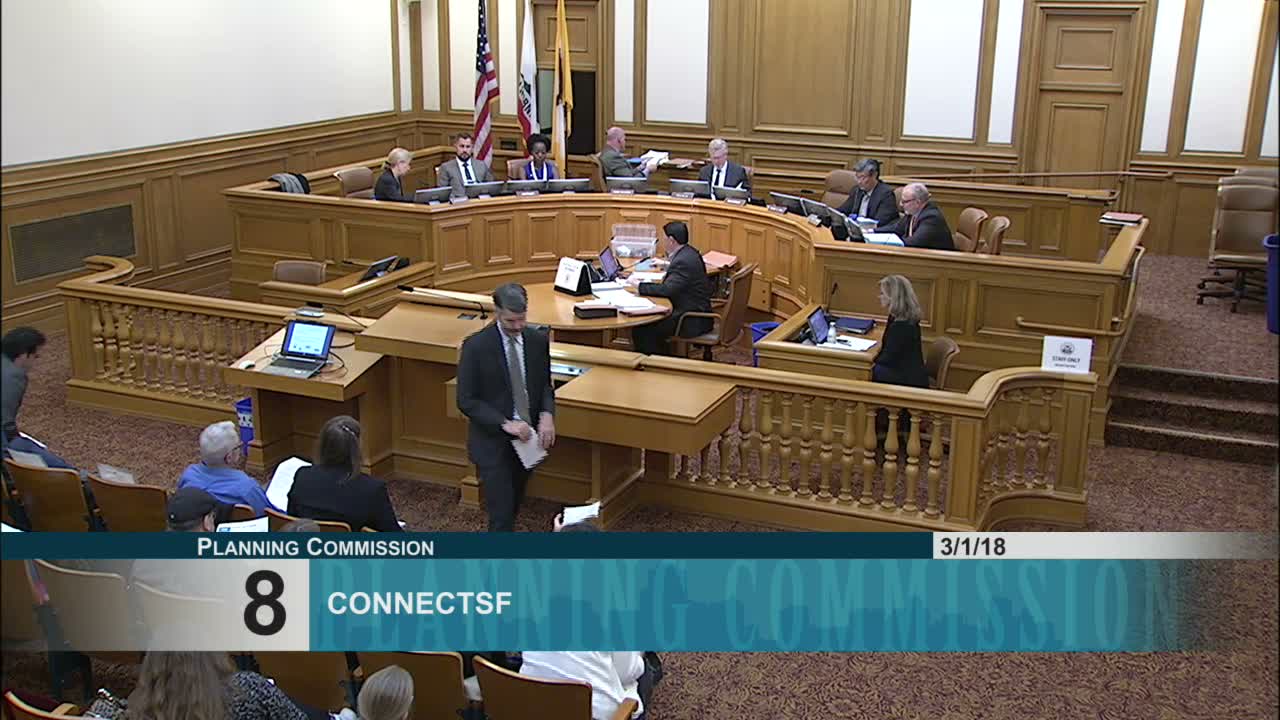
Planning Commission initiates Central SoMa plan after heated debate over jobs, housing and community benefits
Summary
The San Francisco Planning Commission voted unanimously to initiate general-plan and code amendments for the Central SoMa area plan, setting the stage for adoption hearings while commissioners and residents clashed over jobs-vs.-housing balance, displacement risks and a $2 billion public-benefits package.
The San Francisco Planning Commission unanimously voted Thursday to initiate the Central SoMa area plan, advancing a package of general-plan, zoning and planning-code amendments that would rezone large parts of South of Market, increase building capacity near transit and create a public-benefits program the city estimates at more than $2 billion over 25 years.
Supervisor Jane Kim, who represents the area, told the commission the plan pushes the city toward a higher share of affordable units than earlier drafts. “We are hitting 33% affordable housing within this plan,” she said, framing the proposal as a response to the city’s housing crisis and to longstanding neighborhood needs.
Planning staff and project lead Steve Wertheim said the package would rezone much of Central SoMa to a new Central Summa Mixed Use Office district, add a special-use district to require active ground-floor uses and transfer development-rights tools to fund rehabilitation, and set a new public-benefits menu that includes about $500 million for regional transit, $180 million in PDR (production, distribution and repair) value, $170 million for parks and recreation and $130 million toward complete-streets improvements.
“The plan would quadruple [public benefits] to over $2,000,000,000,” Wertheim said. He added the package aims to preserve PDR uses while allowing more housing and office capacity on large lots near transit.
But the hearing that followed laid bare tensions between job-creation objectives and housing and neighborhood-preservation advocates. Community coalitions, neighborhood groups and labor organizations urged stronger safeguards against displacement and called for more guaranteed community control over how public-benefit dollars are spent. Representatives from the We Are SoMa coalition and community-based groups said the current plan does not do enough to prevent displacement of low-income residents and long-standing local businesses.
Organized opponents, including a presenter calling itself the Tago Group, offered an alternative, urging greater emphasis on housing and more protections for PDR and small, local businesses. Labor and tenant advocates pressed the commission to insist on enforceable commitments for local hiring, living wages and protections for existing tenants.
Supporters of the plan — including developer representatives, the San Francisco Bicycle Coalition and some business groups — argued the area’s rare proximity to regional transit and available developable land make it the appropriate place for both job growth and a substantial increase in public-benefit funding for parks, transit and cultural preservation.
Commissioners asked staff for a follow-up set of informational hearings focused on how to maximize housing within the plan’s environmental review limits, how the $70 million social-and-cultural pool should be allocated, and what implementation tools the city can use to limit displacement (land banking, acquisition, and oversight by a community advisory committee). The commission set a target adoption hearing on or after March 29, 2018.
What’s next: staff will return with more granular recommendations on how to increase housing capacity without triggering a new environmental review, and with proposals for an implementation timeline and oversight structures for the public-benefits program. The commission asked for a clear accounting of which community programs will be funded early in the buildout and how tenant return and anti-displacement tools will be funded and administered.
Why it matters: Central SoMa is a 17-block area with major transit assets and a mix of industrial and commercial parcels. The plan could deliver thousands of housing units, tens of thousands of jobs and billions in public benefits, but residents and advocates say the balance of those outcomes will determine whether the plan stabilizes the existing community or accelerates displacement.