Get Full Government Meeting Transcripts, Videos, & Alerts Forever!
Get email alerts on the Neighborhood Strategy topic
No spam. Unsubscribe anytime.
Residents press planners to center anti‑displacement measures in Excelsior/Outer Mission strategy
Summary
Planning staff outlined a neighborhood strategy for the Excelsior and Outer Mission, emphasizing commercial corridor improvements and housing goals; residents and advocacy groups urged stronger anti‑displacement protections, better outreach to immigrant and working‑class residents and commitment to affordable units.
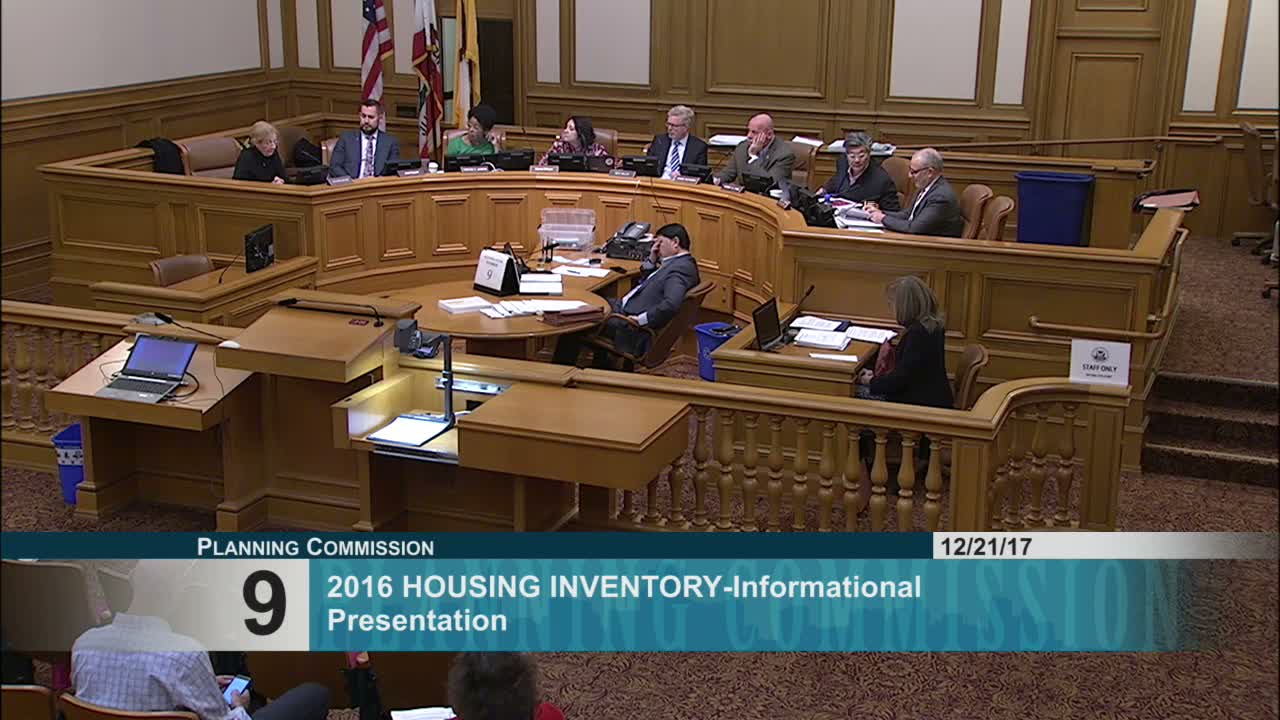
Planning staff presented the first‑phase neighborhood strategy for the Excelsior and Outer Mission at the Dec. 21 Planning Commission hearing, outlining demographic data, neighborhood assets and a public engagement process led by a 31‑member working group.
Project manager Rachel Tanner and staff described the corridor‑focused plan: a map of the project area, a working‑group process that included workshops, tours and a survey, and a draft pipeline of roughly 900 units in buildings larger than ten units (about 500 market‑rate and nearly 400 affordable). Staff said the neighborhood’s assets include robust transit access (Balboa and Glen Park BART nearby), family households and a long commercial corridor along Mission Street.
Public commenters and working‑group members praised the outreach but urged the planning department to strengthen anti‑displacement measures, prioritize family‑sized affordable units and improve cultural and language access. Gilbert Williams and other long‑time residents said upzoning and taller buildings on Mission could accelerate speculation and displacement of seniors and longtime homeowners; several speakers urged a “first‑do‑no‑harm” approach and requested binding commitments to one‑for‑one affordable creation or stronger tenant protections.
Community groups asked that the working group expand language access and outreach to immigrant families and youth; CUHJ (Communities United for Health and Justice) representative Faye Lakani Lau urged more seats for immigrant families and students in the planning process. Other speakers described a need for small‑business supports, vacancy controls and measures to keep ground‑floor retail affordable and neighborhood‑serving.
Commissioners acknowledged the neighborhood’s high homeownership rate and discussed tools to limit displacement, including vacancy taxes, small‑sites acquisition programs, zoning incentives to maximize units in existing envelopes, and revocation hearings for entitlements that are not built. Staff said phase one will conclude with a public draft and focused outreach, with final priorities and an implementation plan to follow in early 2018.
The commission did not vote on policy changes; commissioners and staff agreed the strategy would proceed to further public review and refinements.