After marathon hearing, Planning Commission approves Barbary Coast medical cannabis dispensary at 2161–2165 Irving
Loading...
Summary
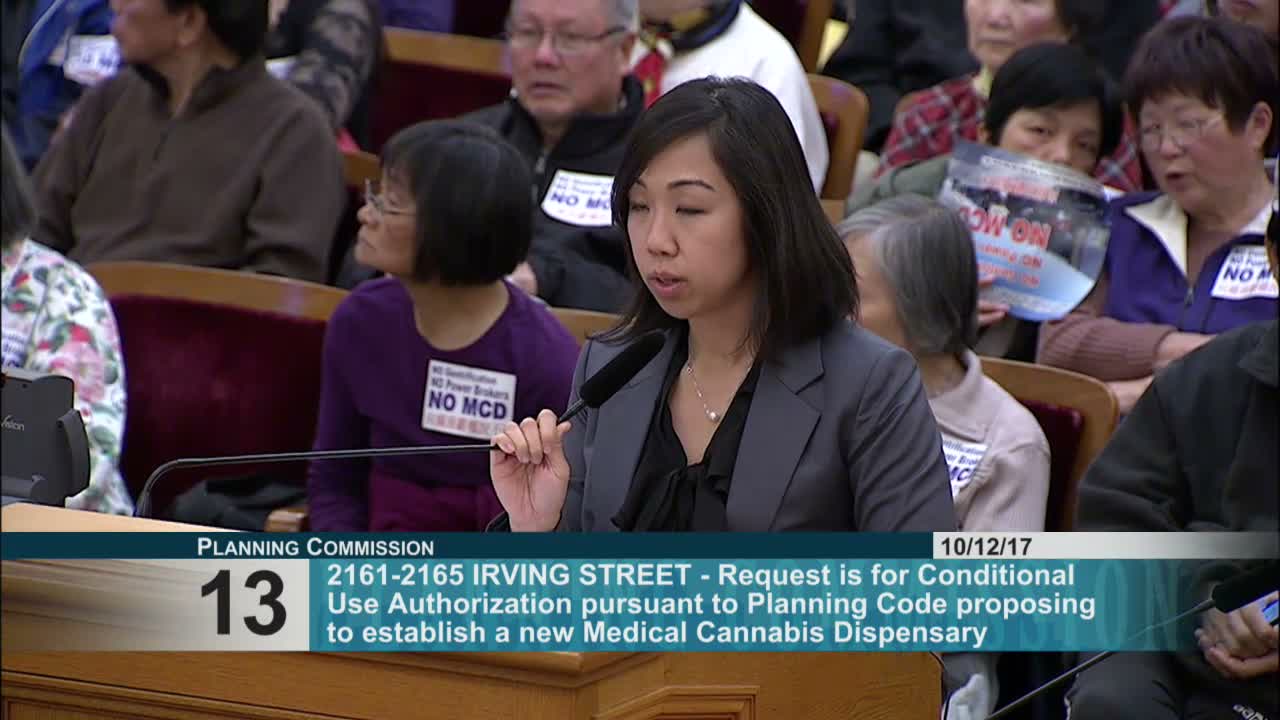
Following nearly six hours of public testimony from hundreds of multilingual speakers, the Planning Commission unanimously approved Barbary Coast Collective’s conditional‑use authorization for a medical cannabis dispensary at 2161–2165 Irving Street with conditions on storefront appearance, security, and operations.
After an extended and multilingual public hearing that drew several hundred speakers Oct. 12, the San Francisco Planning Commission unanimously approved a conditional use authorization for a medical cannabis dispensary (MCD) operated by Barbary Coast Collective at 2161–2165 Irving Street in the Sunset District.
Planning staff summarized the proposal and a voluminous public record: 89 letters of support and roughly 369 individual comments or phone calls in opposition, along with petitions with thousands of signatures submitted on both sides. Staff concluded the proposed MCD complied with applicable planning code criteria, noting the site is outside the 1,000‑foot buffer from schools and youth centers required under planning code section 303. Nancy Tran, the planner, told the commission that "the proposed MCD complies with all standards and requirements of the planning code." (staff report)
Barbary Coast representatives said they targeted Irving Street to improve access for patients on the west side of the city, presented a storefront design intended to be discreet (clear windows with internal screening), and proposed a staffed doorman, 24‑hour exterior cameras, a bilingual community liaison and strict ID and no‑loitering policies. Jesse Henry of Barbary Coast said the operator had held dozens of multilingual community open houses and would provide local hiring and senior outreach programs.
Opponents — neighborhood groups, parents, seniors, merchants and community organizations — argued the site sits within walking distance of Jefferson Elementary and other youth facilities, said the corridor is a family shopping destination and raised concerns about clustering, storefront advertising, visibility to children, and effects on parking and street activity. Many speakers delivered testimony in Cantonese, Mandarin and Vietnamese. Supporters — patients, veterans, seniors, some merchants and advocates — said Sunset residents lack close medical access and praised Barbary Coast’s patient services.
Commissioners debated geographic equity (noting comparatively few dispensaries west of Twin Peaks), storefront appearance, advertising, hours and safeguards. Commissioners asked the sponsor to avoid prominent advertising, to limit visible product displays, and confirmed public‑health and sign‑code controls will apply; Department of Public Health and sign code requirements were noted as additional constraints. The commission approved the CUA with conditions that rely on the operator’s commitments on security, outreach, non‑promotional storefront design, and standard regulatory controls. The motion passed unanimously, 6–0.
What happens next: Staff will incorporate the conditions into the permit and monitor compliance through the business‑permit and public‑health process. Any future conversion to adult‑use retail would require separate discretionary review and neighborhood notice under the conversion process being developed by the Board of Supervisors.