Get Full Government Meeting Transcripts, Videos, & Alerts Forever!
Get email alerts on the Housing Policy topic
No spam. Unsubscribe anytime.
Planning commission adopts interim policy to flag and review removal of "residential flats"
Summary
The Planning Commission adopted an interim policy requiring mandatory discretionary review for projects that remove a defined "residential flat" typology, exempting projects that add net new units and tying the policy to a sunset once residential expansion thresholds are adopted.
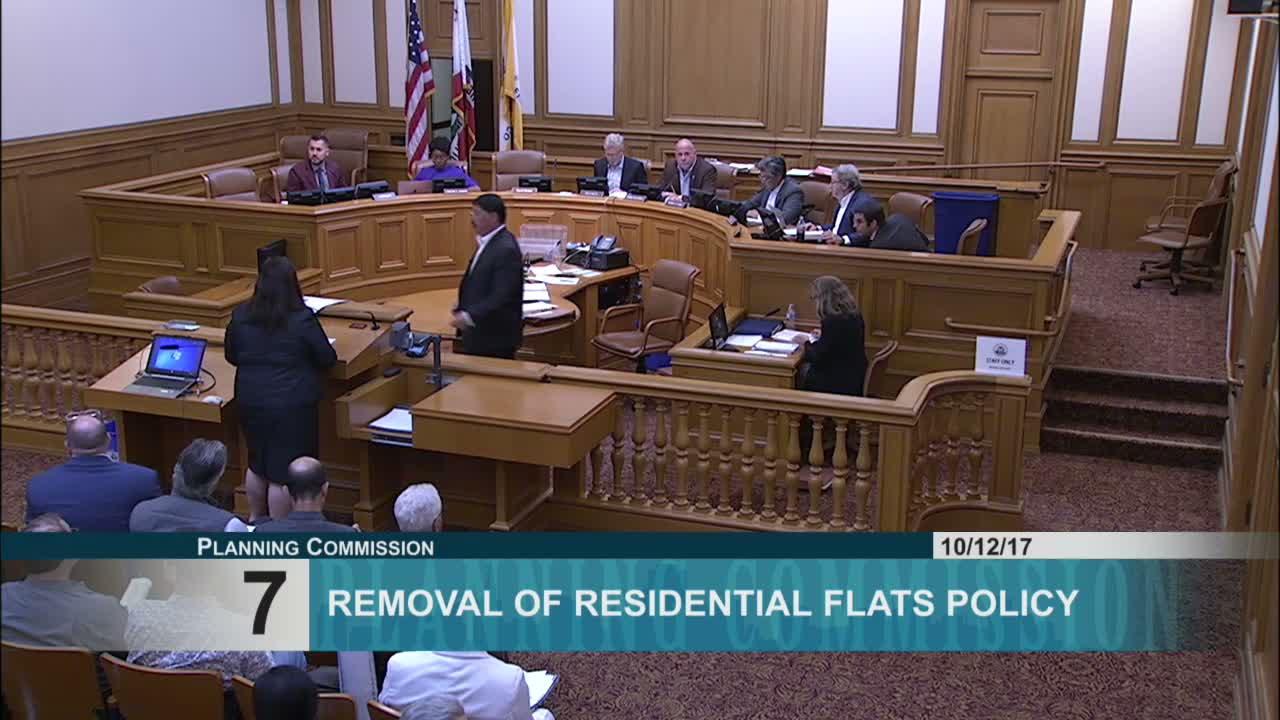
The San Francisco Planning Commission on Oct. 12 adopted an interim policy that defines the city’s "residential flat" housing typology and requires mandatory discretionary review for projects that would remove such flats.
The policy, presented by Planning Department staffer Britney Bendix, would treat a residential flat as a single dwelling unit that generally occupies a full story and has exposure to both the front and rear of a building. Bendix said the policy is intended to create a mechanism to track and publicly notice projects that remove this relatively affordable unit type. "The policy before you would change that," Bendix said in her presentation, describing the definition and the staff recommendation that it apply to new applications after the policy's effective date.
Supporters of the idea told the commission it would help preserve a housing typology seen as important for middle‑income families; opponents, including architects and housing advocates, said the policy was rushed and lacked data. Architect Jonathan Pearlman told commissioners the resolution "appears to be hastily conceived without any community input" and warned it could make property owners less likely to expand housing. Tenant advocates, by contrast, urged the commission to pair review with stronger tenant protections and more robust notice to affected residents.
Commission debate focused on how to define "exposure" (front/rear versus corner exposures) and on ensuring the rule would not unintentionally block projects that add net new units. Commissioner Richards moved to adopt the staff recommendation with two key changes: exempt projects that increase the number of units (to align with the mayor’s housing goals) and include a sunset tied to adoption of the broader residential expansion threshold program. The commission approved the motion 5–1, with Commissioner Johnson voting no.
What happens next: The policy will apply to new applications after the effective date, creating a path for staff‑initiated discretionary review of projects that, in staff’s view, remove residential flats. Staff told commissioners the policy is intended as an interim tool until the broader residential expansion thresholds are finalized.