Get Full Government Meeting Transcripts, Videos, & Alerts Forever!
Get email alerts on the Housing Policy topic
No spam. Unsubscribe anytime.
Planning commission declines to endorse a studio cap, urges study of unit‑mix requirement
Summary
The commission recommended Board of Supervisors approval of the inclusionary housing package with modifications but declined to recommend a specific numerical cap on studio units, asking for additional study on feasibility and citywide impacts.
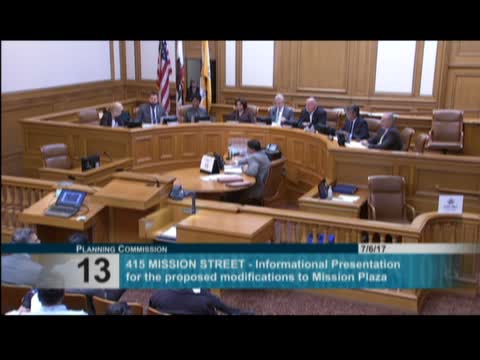
On July 6 the Planning Commission considered a material modification to the city's Inclusionary Housing Program that would set a maximum share of studio units and require minimum shares of two‑ and three‑bedroom units in new projects. Planning staff presented concerns that a strict cap on studios (proposed at 30% by some supervisors) could produce unintended consequences, including harming feasibility for small sites and forcing projects into conditional‑use reviews.
Fernando Marti of the Council of Community Housing Organizations urged commissioners to adopt the board‑sponsored approach, arguing a cap is a modest first step to promote family‑sized units. Staff responded that existing pipeline analyses are limited and that imposing a hard cap without further study could reduce housing production or make unit mixes unworkable in constrained lots.
Commissioners debated trade‑offs: some urged prescriptive requirements to steer the market toward family units, while others warned the commission lacks the data to pick a single percentage and favored a citywide study. After discussion commissioners voted unanimously to forward the consensus ordinance to the Board of Supervisors with a recommendation that the Planning Commission make no specific numeric recommendation on a studio cap at this time and requested additional study to identify an appropriate percentage.
The commission's action preserves the Board's ability to act while flagging the need for more evidence on market and production impacts. Staff recommended, as an interim technical option, that any cap be high (for example, 50%) if the Board were to act before the requested study is complete.