Get Full Government Meeting Transcripts, Videos, & Alerts Forever!
Get email alerts on the Neighborhood Commerce topic
No spam. Unsubscribe anytime.
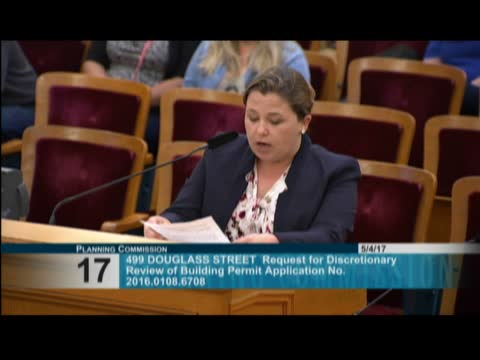
Planning Commission approves change-of-use at 499 Douglas after neighbor dispute; urges local talks
Summary
Commissioners approved a code‑compliant change of use at 499 Douglas (corner market → cafe/restaurant) after a citizen‑initiated discretionary review raised concerns about parking, double‑parking, benches and late‑night activity; commission encouraged the business and neighbors to negotiate mitigation measures.
The Planning Commission declined to uphold a citizen‑initiated discretionary review challenging a long‑running corner commercial change to a cafe at 499 Douglas, approving the code‑compliant change of use on May 4. The neighborhood dispute had focused on double parking, deliveries on a hilltop intersection, outdoor benches and late‑night noise; opponents urged limits on hours, deliveries and outdoor seating.
Neighbors said a recent conversion from a sparsely used grocery to a cafe has increased sidewalk patronage and occasional double‑parking. Supporters—including many neighbors who submitted letters and spoke at the hearing—said the cafe has reactivated an underused storefront, created paid local jobs and become a community hub; dozens of residents submitted letters in support. The commission and staff noted the site has a longstanding commercial use and that a restaurant in a neighborhood commercial setting is a principally permitted use under the planning code. Commissioners urged both sides to negotiate a neighborly mitigation plan; staff said standard good‑neighbor conditions, noise and sidewalk rules remain enforceable.
Outcome and follow up: the commission approved the permit rather than sustaining the discretionary review, and asked staff and the parties to work on practical mitigations (scheduling, delivery management and signage). If problems continue, code enforcement and business licensing tools remain available.