Get Full Government Meeting Transcripts, Videos, & Alerts Forever!
Get email alerts on the State Housing Bills topic
No spam. Unsubscribe anytime.
Planning staff outline state housing bills and funding options as the city looks for tools to increase production
Summary
Planning Department and Mayor——s Office of Housing briefed the commission on key state bills (SB 35, AB 73, SB2, SB3, AB1505/1506, AB915) affecting local housing production, inclusionary rules and funding; community advocates pressed for tenant protections and anti‑displacement measures.
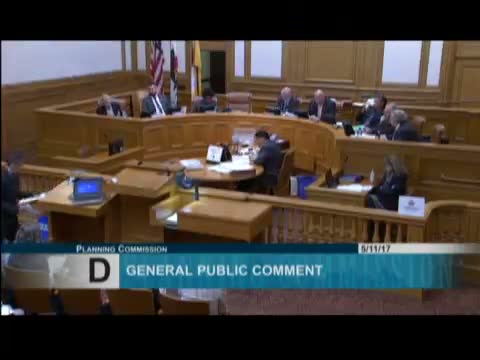
Planning Department staff and the Mayor——s Office of Housing briefed the Planning Commission on May 11 about a slate of state bills that could affect San Francisco's approach to housing production, inclusionary requirements and funding. Staff stressed the city——is subject to many state land‑use laws and highlighted bills including SB 35 (streamlining ministerial approval if jurisdictions fail to meet production targets), AB 73 (housing sustainability districts), AB 1505 (Palmer fix to enable on‑site inclusionary rental units) and funding measures such as SB2 (recording fee) and SB3 (a proposed statewide bond).
Staff framed the briefing with local production and affordability data: coastal California production has lagged and the Bay Area has seen a disproportionate share of high‑income household growth. Speaker James Pappas walked commissioners through programmatic tradeoffs and the way bills could trade delegations of review authority for opportunities such as density bonuses or financial incentives. The Mayor——s Office of Housing summarized four state bills that would raise new revenue for affordable housing (SB2, SB3, AB71 and AB74) and noted San Francisco had submitted letters of support for several funding bills.
Community advocates from a coordinated coalition described a broader agenda: they urged the city to press for tenant protections (AB 1506/Costa Hawkins repeal), local accountability, anti‑displacement tools and targeted amendments to SB 35 to preserve meaningful local review and allow the city to require stronger affordable percentages in exchange for streamlining. Developers and planners discussed metrics, triggers and how ministerial approvals could interact with objective standards and CEQA.
Commissioners discussed implications for the Planning Commission's role, including the need for objective standards to support any streamlining, the limits of zoning capacity versus build‑out, and whether the state proposals would prompt faster local modernization of code and design standards. Staff said work on objective standards and design guidance is already underway as a way to prepare for state action.
The briefing underscored the complexity of reconciling regional goals, statewide enforcement mechanisms and local priorities on inclusion, displacement mitigation and design quality.