Get Full Government Meeting Transcripts, Videos, & Alerts Forever!
Get email alerts on the Variance topic
No spam. Unsubscribe anytime.
Board upholds variance denial for front-yard arbor at 201 Ashton Avenue
Summary
The Board of Appeals upheld the Planning Department’s denial of a front-setback variance for an 11-foot arbor at 201 Ashton Avenue after finding the five statutory variance findings were not clearly demonstrated; the denial was upheld by operation of law when no motion to grant achieved three votes.
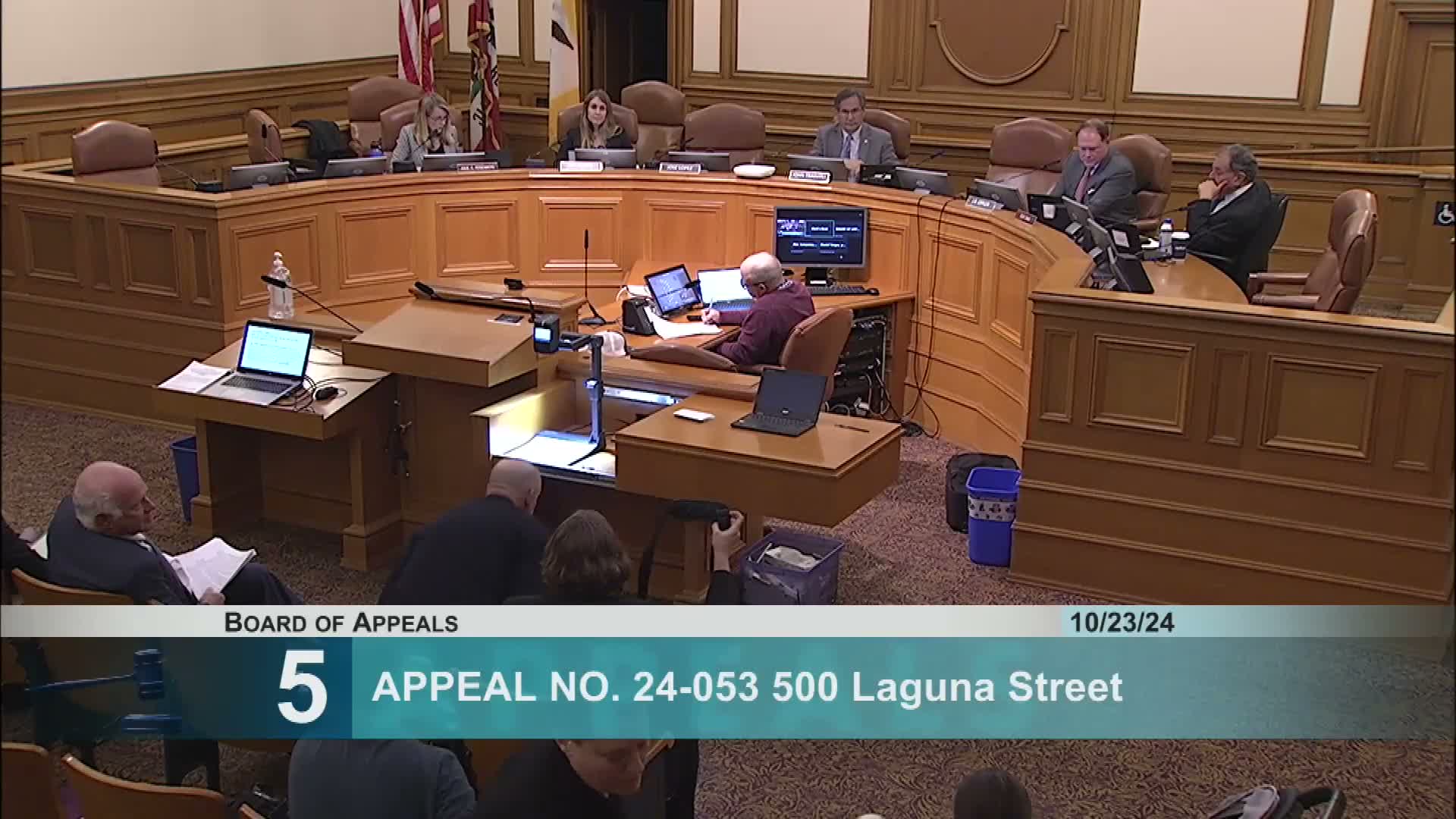
The San Francisco Board of Appeals reviewed an appeal on Oct. 23 from Michal Emberton seeking reversal of a zoning determination denying a variance for an arbor/trellis constructed in the required front setback at 201 Ashton Avenue.
Emberton and supporters told the board the arbor is used daily for neighborhood gatherings, school-related activities and community events, and that it provides traffic-safety benefits at an irregular intersection where cars have struck the property in the past. Emberton said the feature contributes to the neighborhood’s open space and cited local design and open-space policies in defense of the structure.
Planning staff replied that the structure exceeded the dimensions permitted in a front setback and that the Planning Department’s variance denial rested on the five findings required by Planning Code Section 305(c). Zoning Administrator Corey Teague noted front setbacks are treated more strictly than rear yards and that the arbor’s dimensions and location (reported in the record as roughly 11 feet tall and 140 square feet) triggered the variance requirement; he said the department concluded the statutory findings were not met.
Commissioners focused the hearing on whether the appellant had met the five variance findings, which require exceptional or extraordinary circumstances, an undue hardship not attributable to the owner, and other standards. Several commissioners said they were sympathetic to the applicant’s goals for community use but emphasized that variance findings are narrowly drawn and typically related to physical constraints (topography, lot size, or extraordinary conditions). Teague explained that permitted legalization paths exist for some unauthorized units and features but that the board’s role at the hearing was confined to the variance standards.
No motion to grant the variance obtained the three votes required; Commissioner Rick Swigg moved to deny the appeal on the ground that the five findings were not met, but the motion failed to receive three affirmative votes. With no successful motion to overturn the zoning administrator, the variance denial was upheld by operation of law. If Emberton seeks other relief, planning staff outlined next steps — including pursuing an enforcement appeal or pursuing a narrower legalization route, such as relocating a permitted-size arbor to a rear yard where different rules apply.
The board did not order removal at the hearing; the denial maintains the zoning administrator’s position that the existing trellis requires either a granted variance or removal under the enforcement process.