Get Full Government Meeting Transcripts, Videos, & Alerts Forever!
Get email alerts on the Adu Policy topic
No spam. Unsubscribe anytime.
Planning Commission backs ADU ordinance changes to meet new state rules, with staff tweaks
Summary
The commission approved updates to San Francisco's ADU rules to meet state law: ministerial approvals for qualifying ADUs in single-family zones, a 120-day review timeline and other clarifications. Staff recommended additions (garages eligible for conversion, expanded historic-review scope) and supervisors proposed follow-up amendments.
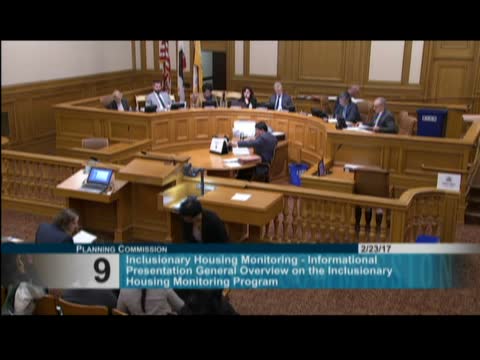
The Planning Commission on Feb. 23 voted to approve an ordinance to amend San Francisco's accessory dwelling unit (ADU) rules to comply with recently enacted state law that took effect Jan. 1, 2017.
The state law requires jurisdictions to allow ADUs in single-family homes under defined conditions and to process qualifying applications ministerially within a specified period. Planning staff and Supervisor Peskin's office presented the proposed local amendments: ADUs in RH1 and RH1S districts constructed within existing living areas and meeting defined standards would be ministerially approvable and subject to a 120-day review deadline; cities may not impose minimum parking requirements for such ADUs. Staff recommended several clarifications before forwarding the ordinance: allow conversion of garages to ADUs (consistent with recent local practice), broaden historic-preservation review to all known historic resources (not only California Register-listed properties), ensure ministerial review timing includes preservation checks, and allow the same ministerial pathway for single-family homes on multifamily-zoned parcels.
Several supervisors' offices submitted additional suggested changes (eviction-protection clarifications for temporary displacement during seismic retrofits; removal of caps on seismic retrofit ADUs; allowing limited conversion of vacant commercial space to ADUs in neighborhood commercial districts subject to limits). The commission adopted staff's recommended ordinance with clarifying modifications and noted that further policy options from supervisors would return as trailing legislation; the vote passed 6-1.
Why it matters: the ordinance preserves a local ADU framework that otherwise would have been at risk of nullification by the new state law, keeps key local controls where allowable, and creates a faster ministerial approval track for qualifying ADUs. Commissioners and supervisors noted further policy questions (eviction protections, commercial-to-residential conversions, program caps) that will require separate legislative follow-up.
Next steps: staff will finalize ordinance text for the Board of Supervisors, continue outreach and monitor early ADU permit filings under the revised rules.