Get Full Government Meeting Transcripts, Videos, & Alerts Forever!
Get email alerts on the Coastal Resilience topic
No spam. Unsubscribe anytime.
Planning staff previews Ocean Beach local coastal program amendment focused on erosion and managed retreat
Summary
Planning Department presented a proposed Local Coastal Program amendment to update the city’s 1986 program to address coastal erosion and sea‑level rise at Ocean Beach, including managed retreat south of Slope Boulevard; the item was informational and will return to the commission next year for introduction and referral to the Board of Supervisors and Coastal Commission certification.
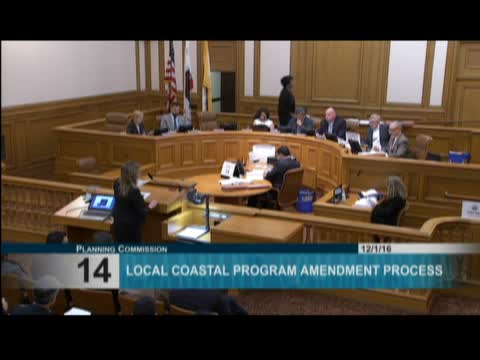
Planning Department staff briefed the Commission on Dec. 1 on a proposed amendment to San Francisco’s Local Coastal Program intended to align the city’s Coastal Area Plan with contemporary sea‑level rise and coastal hazard science.
Maggie Winger (Citywide Planning Division) said the 1986 local coastal program remains certified but out of date for near‑term erosion threats on the Western shoreline. Staff described recent bluff retreat events at South Ocean Beach and explained that the amendment would provide policy guidance for evaluating sea‑level rise adaptation projects, incorporate elements of the Ocean Beach master plan, and support a managed‑retreat approach south of Slope Boulevard where erosion is most acute.
Winger described current temporary measures — such as sand bypassing — and noted that ongoing interagency work with the Public Utilities Commission, Public Works, Golden Gate National Recreation Area and the Army Corps of Engineers has informed the draft amendment. The department has conducted public outreach, including open houses, and will return next year to introduce ordinance language, which would then be considered by the Board of Supervisors and submitted to the Coastal Commission for certification.
Public commenters urged the department to coordinate funding and infrastructure plans with the Public Utilities Commission, to provide empirical data on buried contamination and shell mounds, and to ensure the Coastal Commission and other agencies’ roles are clearly integrated.
Next steps: Staff intends to return with draft amendment language and maps, then pursue local approval followed by Coastal Commission review and certification.