Get Full Government Meeting Transcripts, Videos, & Alerts Forever!
Get email alerts on the Vision Zero topic
No spam. Unsubscribe anytime.
Planning Commission recommends adding Vision Zero to General Plan to reduce traffic fatalities
Summary
The Planning Commission recommended approval of amendments to the General Plan to embed Vision Zero (zero traffic fatalities by 2024) into transportation and urban design chapters; staff and advocates said the change would help mainstream pedestrian safety into project review while some speakers urged site-specific caution.
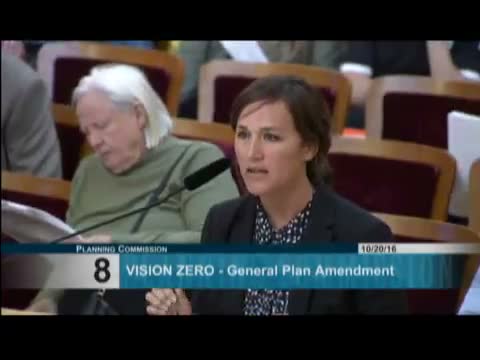
The San Francisco Planning Commission on Thursday voted unanimously to recommend amending the General Plan to include the city's Vision Zero policy, which aims to eliminate traffic deaths by 2024.
Planning Department staff said the changes add objectives and policy language to the transportation and urban design elements to prioritize street safety, emphasize multidisciplinary approaches (engineering, enforcement, education), and replace older pedestrian maps with a new Key Walking Streets map to guide street improvements. "This proposed amendment is really an implementation action of a resolution that this commission passed two years ago," Planning Department presenter Lily Langlois told commissioners.
Public commenters asked for data transparency and site-specific consideration, including paratransit users who raised service delays and accessibility concerns. Staff said several Walk San Francisco suggestions (such as ideal crosswalk spacing and lane-conversion policies) are better handled in SFMTA's operational guidelines rather than the General Plan, which provides broad policy direction.
The commission recommended approval and asked staff to coordinate with SFMTA and other agencies on implementation. The amendments now proceed to the Board of Supervisors for consideration.