Get Full Government Meeting Transcripts, Videos, & Alerts Forever!
Get email alerts on the Housing Development topic
No spam. Unsubscribe anytime.
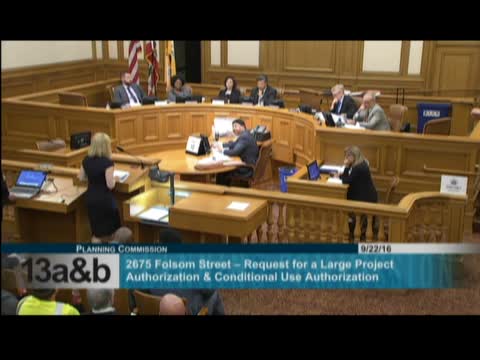
Commission approves 2675 Folsom project after months-long outreach; opponents warn of cultural-district displacement
Summary
After extensive revisions and months of outreach, the commission approved a 117-unit development at 2675 Folsom that includes 23 on-site BMR rental units, 5,200 sq. ft. of below-market PDR/artist space and union-construction commitments; Latino Cultural District advocates urged more mitigation and delay, citing cumulative gentrification.
The Planning Commission approved a large project authorization and conditional-use authorization for 2675 Folsom Street after lengthy public hearings and extensive outreach between the developer, Access Development, staff and neighborhood groups.
Access revised the project since the August hearing to add 5,200 sq. ft. of below‑market PDR space (intended for artists), increase on‑site affordable units to 23 (about 20–26% depending on the final Costa Hawkins agreement), and commit to a union signatory contractor and local hiring priorities. Staff and the sponsor said the PDR space will be offered at below-market rent, built out at the sponsor’s expense and delivered under a long-term lease to a nonprofit operator.
Opposition speakers — including Latino Cultural District representatives and neighborhood advocates — urged delaying the project until MAP 2020 protections and mitigation tools are adopted, saying the district faces cumulative displacement and commercial rent pressures. Supporters including the Housing Action Coalition, labor unions and workforce groups argued the project brings permanent on‑site affordable housing, PDR space, living‑wage construction jobs and will activate a formerly vacant lot.
After deliberation the commission voted 5–2 to approve the project; commissioners Moore and Melgar voted no. Staff noted the project exceeded code inclusionary requirements and reduced parking while adding PDR and affordable units. Opponents asked the city to accelerate MAP 2020 tools to address cumulative impacts on small businesses and cultural uses.