Get Full Government Meeting Transcripts, Videos, & Alerts Forever!
Get email alerts on the 1327 Polk Hours topic
No spam. Unsubscribe anytime.
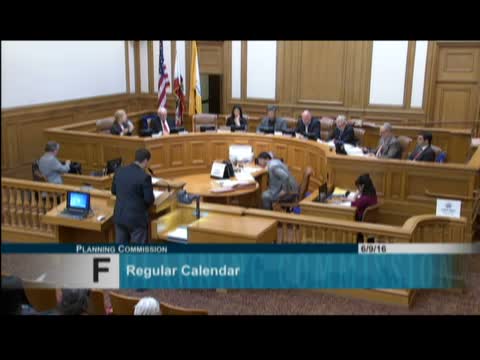
Planning Commission approves Poorhouse wine bar’s request to extend hours to 2 a.m.
Summary
The Planning Commission approved a conditional use authorization allowing the Poorhouse wine bar at 1327 Polk Street to extend operating hours from midnight to 2 a.m. after hearing neighborhood testimony for and against mitigation measures; the vote was unanimous, 7–0.
The San Francisco Planning Commission on June 9 unanimously approved a conditional use authorization allowing the Poorhouse, a wine store/tasting room at 1327 Polk Street, to extend its closing hour from midnight to 2 a.m., seven days a week.
Staff presented the request and noted the Polk Street neighborhood commercial district’s principal hours are 6 a.m. to 2 a.m. and that the applicant is seeking restoration of previously permitted hours. Planning Department analyst Nick Foster said the department recommended approval with standard conditions (trash removal, cleanliness and other noise-attenuation measures) after finding the business compatible with the Polk Street commercial district and the general plan.
William Bigelow, the owner and project sponsor, told the commission he has operated the business since 2005 and “did extensive outreach” and secured neighborhood support. “Everyone is in favor of me enlarging my hours,” Bigelow said, describing the venue as a “quiet, well-run establishment” that attracts an older clientele.
Opponents, including a resident who lives across the street, described past episodes of loud music before the business moved live performances to the back of the space. “It was so loud … it was booming,” Ling Tom said, recounting a 2012 meeting and repeated calls to police that prompted mitigation steps.
Commissioners questioned both the complainant and the owner about past police calls and measurements. Bigelow told the panel that the Entertainment Commission and police had conducted noise testing and “never… found me in violation,” and that the bar uses noise‑dampening curtains, keeps windows closed, and limits amplified music to a few evenings a week.
After discussion of the neighborhood outreach record — staff said the sponsor submitted about 105 letters of support and received two letters identified as opposition — the commission voted to approve the conditional use authorization subject to the recommended conditions. The motion passed 7–0.