Get Full Government Meeting Transcripts, Videos, & Alerts Forever!
Get email alerts on the Residential Development topic
No spam. Unsubscribe anytime.
Board of Appeals denies neighbor challenge to 264 Diamond Street expansion, 3–2
Summary
The San Francisco Board of Appeals denied an appeal by a next-door neighbor seeking a 5-foot setback for an addition at 264 Diamond Street, ruling the project complies with planning code and that impacts to mid-block open space do not require modification. The board split 3–2 after questioning planning staff about a late change in recommendation.
The San Francisco Board of Appeals on March 15 denied an appeal by neighbor Gabe Zeldin seeking a 5-foot setback on a proposed rear addition at 264 Diamond Street, upholding a permit that the Planning Department and the Planning Commission had approved.
The appeal, filed by Zeldin and Carrie Simons of 258 Diamond Street, argued the permit holder’s proposed addition would reduce light, air and a visual connection to the block’s mid‑block open space. “We have three concerns: light, air, and visual access to the mid block open space,” Zeldin told the board, asking commissioners to require a 5‑foot setback to bring the design into compliance with residential design guidance.
Planning staff told the board it had reexamined the block context and determined the property is a small‑footprint lot in a mixed block where the guidelines allow more flexibility. Deputy Zoning Administrator Tina Tam said the department initially recommended a 3‑foot setback during earlier review but later, after assessing the block’s overall pattern, did not find a setback necessary. Planning recommended denying the appeal and upholding the permit.
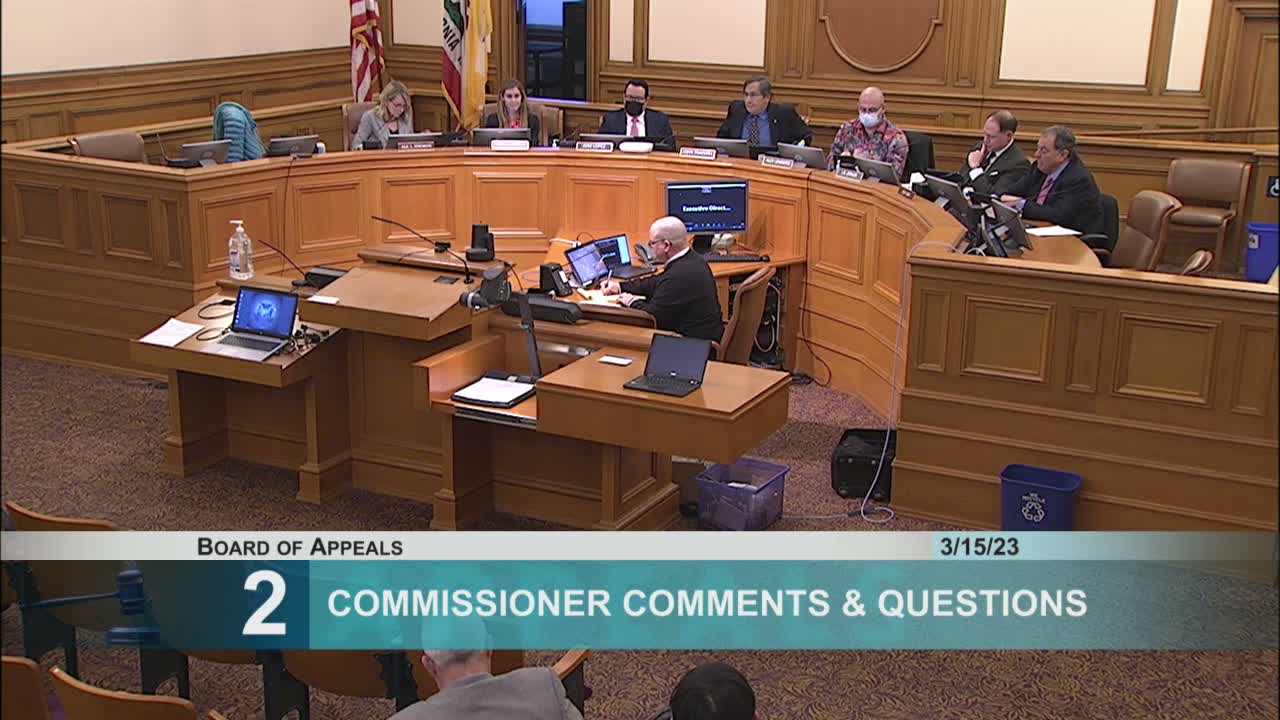
Commissioners focused much of their questioning on whether the Planning Department’s position had changed during the discretionary review hearing and on how the department applies the Residential Design Guidelines’ concept of mid‑block open space. Several commissioners said they were troubled by apparent internal difference of opinion at Planning, but others noted the commission has discretion and that the project fits within the planning code’s development envelope. President Rick Swigg moved to deny the appeal; the motion carried 3–2.
The board’s decision leaves in place the permit (No. 202111162462) to reconstruct rear elements and make interior changes. Planning and the Commission remain the city bodies that interpret the design guidelines; the Board of Appeals conducted a de novo review and declined to substitute a different outcome.
The board recorded that any party interested in rehearing procedures should consult board staff. No additional enforcement conditions were adopted by the Board of Appeals following the vote.