Get Full Government Meeting Transcripts, Videos, & Alerts Forever!
Get email alerts on the Transportation Demand Management topic
No spam. Unsubscribe anytime.
Planning commission initiates ordinance to tie new development parking to vehicle‑miles reductions
Summary
The Planning Commission unanimously agreed to begin formal adoption of a Transportation Demand Management ordinance that would set VMT reduction targets for new developments (based on parking supply) and require a menu of measures, pre‑occupancy checks and ongoing compliance monitoring.
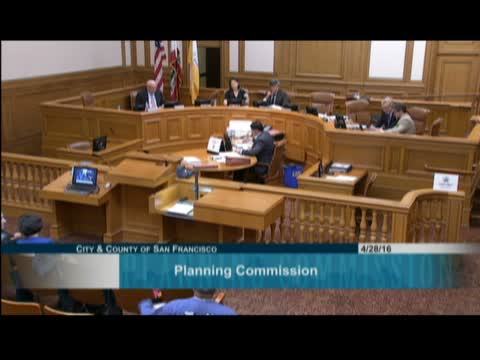
The San Francisco Planning Commission voted unanimously April 28 to initiate a proposed Transportation Demand Management ordinance that would require most new developments to meet project‑specific targets for reducing vehicle miles traveled.
The ordinance, presented by Planning Department, SFMTA and SFCTA staff, would apply to new residential projects of more than 10 units and nonresidential projects larger than 10,000 square feet. Staff said the target for each project would be calculated from the site’s off‑street parking supply: “More parking at the site, more TDM measures that you need to provide,” Wade Whitgraf, senior planner, said in his presentation of the point‑menu system.
Developers would use an online tool to enter proposed parking and building size, receive a points target, and choose measures from a 26‑item menu (examples include bicycle parking and reduced parking supply, each weighted by expected VMT effect). Staff said measures would be supported by fact sheets and the menu would be updated iteratively as new evidence becomes available.
The proposal also builds in implementation and enforcement steps: a pre‑occupancy compliance check to verify physical measures such as bike parking and car‑share spaces; an 18‑month post‑occupancy reporting requirement; and spot checks every three years. Staff said two ongoing positions in the department budget are intended to support these compliance tasks.
Public commenters largely supported stronger TDM but urged changes to close a perceived loophole that might let projects hide excess parking inside a “parking garage” use. Tom Dolevich of Livable City urged the commission to include parking garages and parking lots in the ordinance, warning that mixed‑use projects can otherwise add substantial vehicle‑generating parking. Several commissioners asked about grandfathering projects already in the pipeline, the possibility of a fee‑out option and how point values were derived. Staff said a fee‑out is not in the current proposal because of nexus and implementation issues but said it had considered the option and would continue outreach and analysis.
Commissioners pressed for stronger monitoring and for more detailed guidance on how the menu’s points were calculated; staff said the menu and supporting fact sheets would be released ahead of the adoption hearing and that the department would collect empirical data from new projects to refine point values over time.
In the vote to initiate the legislative process, Commissioner Richards said he wanted a return briefing after the program has been in place so the commission could evaluate outcomes. Commissioner Moore and others emphasized enforcement and the importance of tying parking incentives to travel choices. The motion to initiate passed 7‑0.
Next steps: staff will publish program standards, fact sheets and the online target tool, continue outreach with the SFMTA and stakeholders, and return to the commission with formal ordinance language and program standards as part of the legislative process.