Get Full Government Meeting Transcripts, Videos, & Alerts Forever!
Get email alerts on the 1066 Market topic
No spam. Unsubscribe anytime.
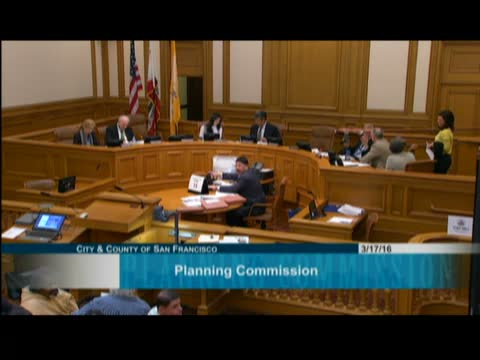
Planning Commission upholds PMND but approves 1066 Market Street project amid neighborhood displacement debate
Summary
Commissioners upheld staff's preliminary mitigated negative declaration and then approved Shorenstein's 12‑story housing project at 1066 Market Street after hours of public testimony. Opponents argued CEQA should consider displacement; staff and proponents said socioeconomic claims are not CEQA triggers and emphasized the project's permanent below‑market units.
The Planning Commission on March 17 upheld a challenge to the preliminary mitigated negative declaration (PMND) for the 1066 Market Street proposal and then moved to consider the project itself, drawing one of the meeting's largest public turnouts.
Appellant Sue Hester, representing San Franciscans for Reasonable Growth, argued the PMND failed to account for cumulative displacement and socioeconomic impacts in the Mid‑Market/Tenderloin corridor. She urged a broader planning discussion about what rapid market‑rate development is doing to services, emergency rooms and long‑term residents.
Planning staff responded that the California Environmental Quality Act (CEQA) requires analysis of physical environmental changes; socioeconomic and economic effects (including generalized displacement) are considered significant under CEQA only when they lead to direct, physical environmental changes. Staff noted the project site is a vacant lot and that the PMND analyzed cumulative population and housing consistent with regional Plan Bay Area growth assumptions.
After extended testimony from community organizations, neighbors and service providers—many urging more than the proposed 12% inclusionary units for on‑site below‑market housing—the commission voted to uphold the PMND. The commission then heard the project presentation from Shorenstein Residential, which described design, a 0.3 vehicle parking ratio, and a community benefit package including homegrown neighborhood security, laundry improvements for a nearby SRO and funds for local nonprofits. Shorenstein also committed to 36 permanently below‑market rental units on‑site and said the development team would be prepared to proceed once environmental review is complete.
Commissioners debated whether to delay action pending expected ballot‑driven and trailing legislation raising inclusionary housing obligations. Several members said that increasing inclusionary percentages is a legislative question for the Board of Supervisors and voters; others urged more voluntary proffers. The commission approved the downtown project authorization and related conditional use findings allowing exemption of the square footage of the BMR units from FAR calculations, with a 5–2 vote (Commissioners Moore and Wu opposed). Staff and proponents said the project will replace an underutilized surface parking lot with new housing and retail activation for the block.
What comes next: the project will advance through the entitlement steps and to the Board of Supervisors as applicable; staff agreed to continue community coordination and to track how any recently proposed charter/trailing legislation would affect projects already in the entitlement pipeline.