Get Full Government Meeting Transcripts, Videos, & Alerts Forever!
Get email alerts on the Academy Of Art Imp topic
No spam. Unsubscribe anytime.
Residents, unions press Planning Commission for tougher enforcement as Academy of Art IMP review advances
Summary
At a lengthy informational hearing, Planning Department staff outlined the Academy of Art University institutional master plan update and enforcement timeline; community members and unions urged stronger penalties, clearer accounting of fines and protections for rent‑controlled housing as the draft EIR proceeds.
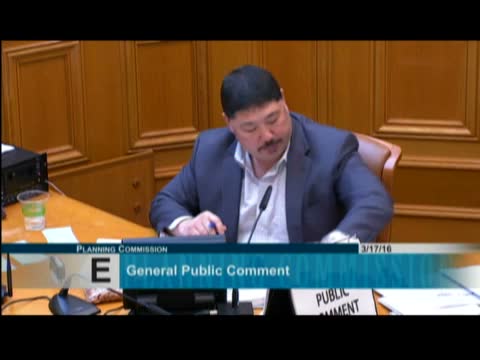
Planning Department staff told the San Francisco Planning Commission on March 17 that it has continued work to bring hundreds of Academy of Art University properties into compliance and advance the school’s Institutional Master Plan (IMP) update while the department finishes a draft environmental impact report (EIR).
Mary Woods, department staff, told commissioners that of about 40 AAU properties under review, staff has preliminarily categorized 10 as likely to require conditional use authorization, two as needing only building permits, 13 as subject to historic preservation review, six believed to be legal uses today and nine that are not permitted under the current planning code. Staff said responses to the draft EIR comments are due July 1 and that the final EIR is anticipated for a Planning Commission hearing in July 2016.
The presentation prompted extensive public comment and repeated questioning from commissioners about the scope of enforcement and housing impacts. Longtime community attorney Sue Hester said AAU has hidden acquisitions and repeatedly submitted inadequate IMPs over decades and urged the commission to press for fuller public review and firmer deadlines. Spike Khan and other neighborhood speakers said the Academy’s housing model has removed hundreds of units from the rental market and urged immediate action to protect rent‑controlled stock.
Staff and enforcement managers replied with specifics: one property, 460 Townsend, has accrued roughly $500,000 in penalties referred to the City Attorney’s Office; additional fees and time‑and‑materials assessments across other sites total in the low six figures so far, and the department has used penalty accrual and notice‑of‑violation strategies to compel filings that produced the draft EIR. Staff said no penalties have yet been paid by the institution but that the city will begin accruing penalties again if the school fails to meet a July 1 deadline for completing the comments‑and‑responses and the existing technical memo that staff is preparing.
Commissioners asked staff to prepare a clearer, itemized table listing which AAU properties are in each category, what penalties (start date and totals) exist per site, and which entitlements will require legislative changes. Several commissioners supported an informational session focused exclusively on housing conversions and policy options for mitigating loss of rent‑restricted units before the commission considers individual conditional use authorizations.
Unions and worker advocates raised concerns about impacts to hotel‑workforce housing; Unite Here Local 2 asked the department to account explicitly for how student housing could siphon rent‑controlled units used by service workers.
Staff said it will bring supplemental materials including an updated penalties table and site‑level categorization to the commission and recommended the planned schedule for the EIR remain in place so that formal project hearings can begin as the environmental review concludes. The commission did not act on policy changes at the March 17 meeting; commissioners asked staff to prepare additional data and to discuss process options for grouping properties by review type when the EIR is complete.