Get Full Government Meeting Transcripts, Videos, & Alerts Forever!
Get email alerts on the Inclusionary Housing topic
No spam. Unsubscribe anytime.
City proposes changes to inclusionary housing rules to spur more off‑site and middle‑income units
Summary
Planning and Mayor's Office staff released draft amendments to the inclusionary housing ordinance proposing new off‑site compliance methods, extended timelines secured by letters of credit, a small‑sites fee option, and a "dial" program to trade higher AMI targeting for more units. The proposals drew strong support and sharp critique from housing advocates and community groups.
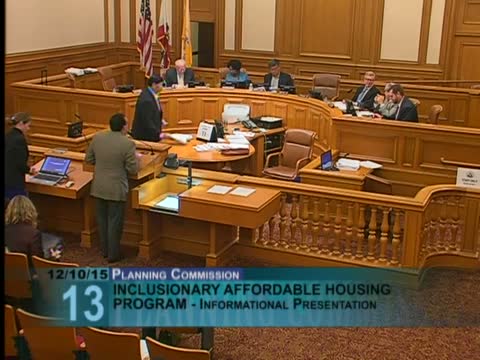
City planning staff and the Mayor's Office of Housing presented proposed amendments Dec. 10 to San Francisco's inclusionary housing ordinance that would change how developers can meet affordable‑housing obligations.
Under the draft ordinance staff proposed creating a nonprofit provider / joint‑venture off‑site method, lengthening timing for off‑site delivery (with letters of credit as security), extending the eligible neighborhood radius to 1.25 miles, and adding a new option to direct in‑lieu fees to MOHCD's small sites program. For ownership off‑site units staff proposed raising the target from 70% AMI to 90% AMI to align with on‑site ownership targeting and introduced a "DIAL" (dial) program allowing developers to serve higher AMI bands in exchange for providing more units overall.
The public record was full. Nonprofit housing providers, community advocates, trade groups and neighborhood organizations asked for changes: some urged bigger radii or waivers to make off‑site delivery feasible; many urged safeguards so off‑site units remain local and serve low‑ and moderate‑income households rather than solely middle‑income residents; housing counselors warned that raising off‑site ownership AMI could reduce opportunities for households under 90% AMI; affordable‑housing advocates pushed for stronger transparency and competitive nonprofit partner selection. Several affordable‑housing development and builder groups said the current off‑site rules and fee levels discourage off‑site production and supported many of staff's proposed incentives.
Staff said the package emerged from an extensive multi‑stakeholder working group and that proposed changes aim to expand real options for producing units without undermining on‑site integration. The item was informational; staff will return with refined text and an adoption hearing in early 2016.