Get Full Government Meeting Transcripts, Videos, & Alerts Forever!
Get email alerts on the Affordable Housing Policy topic
No spam. Unsubscribe anytime.
Planning Commission deadlocks on Wiener plan to exempt 100% affordable housing from conditional‑use review
Summary
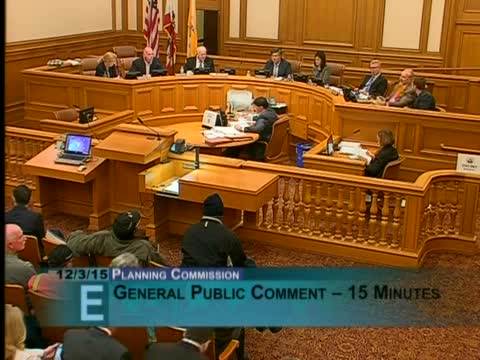
The Planning Commission split 3–3 on Supervisor Scott Wiener’s ordinance that would exempt 100% affordable housing projects from conditional‑use (CU) review and related large‑project processes, leaving the item to move to the Board of Supervisors without a Planning Commission recommendation for approval.
Supervisor Scott Wiener urged the Planning Commission to speed construction of permanently affordable homes by removing lengthy conditional‑use hearings for projects where all units are reserved as affordable. “We are in the middle of a very intense housing affordability crisis, and we need more affordable housing yesterday,” Wiener told commissioners while introducing the ordinance, which would apply to projects restricted at or below 120 percent of area median income (AMI).
Supporters — including nonprofit housing developers and affordable‑housing advocates — said the change would cut months from an entitlement timeline and increase certainty for nonprofit sponsors. Ally Gaylord of Bridge Housing told the Commission that administrative approval would mean less time and cost to bring projects online.
Opponents — neighborhood groups, tenant advocates and several commissioners — argued the change would reduce public notice and remove the Commission’s ability to require context‑sensitive design changes. Speakers from the Coalition for San Francisco Neighborhoods and the Richmond Community Association pressed for a continuance and for stronger protections to prevent the demolition of rent‑controlled housing.
Planning staff recommended a narrower path that would preserve public notice and leave avenues of discretionary review available when neighbors request it. Commissioners pressed staff and the supervisor’s office for precise definitions of “affordable,” the interaction with a separate Affordable Housing Bonus Program, and how the change would affect lot mergers, the large project authorization (LPA) process and access to code modifications such as 3.09 and 3.29.
After multi‑hour public comment and lengthy commissioner discussion, motions to approve the ordinance with amendments failed to obtain the four votes required. The Commission recorded a 3–3 split on a final motion, which under the Commission’s rules amounts to failure of the motion and results in the legislation moving to the Board of Supervisors without a Planning Commission recommendation for approval.
What happens next: Because the Planning Commission split, the Board of Supervisors will receive the ordinance and hear it at Land Use and on the full board. Planning staff said they will continue to refine the record and to coordinate with the mayor’s office, MOHCD and community stakeholders, and the Commission and several speakers urged the Board to weigh the ordinance alongside the city’s broader affordable‑housing package.
Outcome and next steps: The Planning Commission did not vote to recommend approval. The Board of Supervisors is now the next venue where the measure will be considered. Planning staff and the supervisor’s office indicated they will continue outreach and that substitute legislation or additional clarifying language could be introduced at the Board stage.