Get Full Government Meeting Transcripts, Videos, & Alerts Forever!
Get email alerts on the Taxi Medallions topic
No spam. Unsubscribe anytime.
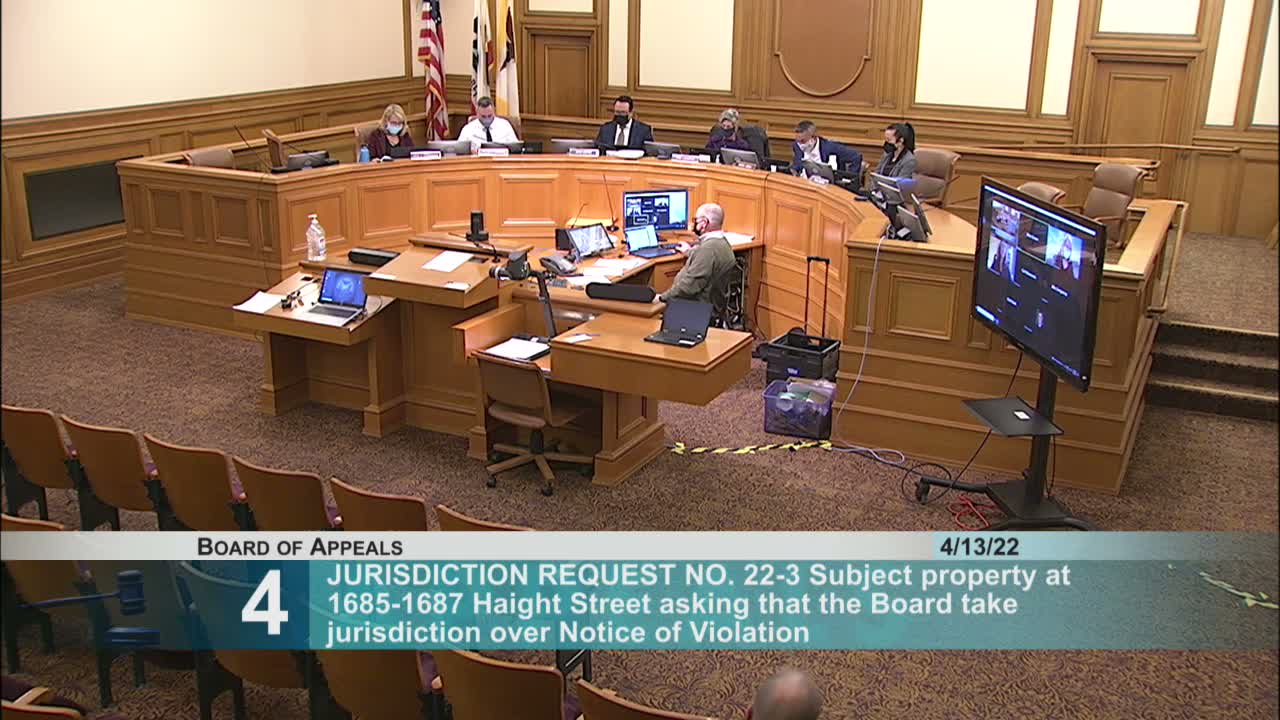
Board continues Robert Scrack medallion appeal for one year to allow SFMTA policy review
Summary
After lengthy testimony about staff advice, ADA policy and medallion classifications, the Board failed to overturn SFMTA’s nonrenewal of medallion No. 878 for lack of the four‑vote threshold and instead voted to continue the Scrack appeal to the call of the chair for one year to allow potential SFMTA action or legislation.
The Board of Appeals heard a lengthy, often emotional appeal from taxi medallion holder Robert Scrack and his counsel, Heidi Machen, who asked the Board to overturn SFMTA’s decision to nonrenew and revoke medallion No. 878. Machen argued that Scrack, who she said has disabilities, relied on SFMTA staff advice in 2015 that he could stop renewing his A card while retaining his medallion, and that SFMTA’s current reliance on a code section and enforcement practice unfairly cost him the ability to keep his permit.
SFMTA enforcement representatives (Philip Kranagh) explained the agency’s position: post‑Proposition K medallions are generally subject to a full‑time driving requirement and medallions of that class require a valid A card for continued issuance; the agency relied on Transportation Code provisions and prior litigation often referred to as Sloan to support enforcement. SFMTA also pointed to Resolution 09‑138 (the ADA policy/medical modification policy) as a source of limited, temporary relief from driving requirements but said that A‑card requirements remain a separate ground for nonrenewal.
Commissioners questioned whether past staff advice could create equitable estoppel against the agency. A motion to grant the appeal on equitable‑estoppel grounds drew votes but did not reach the four‑vote threshold required for a favorable ruling. Rather than issue a final reversal, the Board agreed to continue the matter to the call of the chair for one year, giving SFMTA time to clarify policy or consider legislative fixes (the motion to continue passed 3–0). The continuance preserves the appellant’s opportunity to return to the Board should SFMTA enact code or policy changes affecting medallion transferability or the treatment of disabled medallion holders.
The Board’s discussion highlighted tensions between longstanding program rules, operational changes since the advent of ride‑hailing, and the effects on long‑time medallion holders who say they relied on earlier staff guidance.