Get Full Government Meeting Transcripts, Videos, & Alerts Forever!
Get email alerts on the Telecom Infrastructure topic
No spam. Unsubscribe anytime.
Planning Commission allows Verizon microcell at 1801 Fulton after residents raise health and precedent concerns
Summary
Despite neighborhood objections and reference to a 2007 agreement that led T‑Mobile to withdraw, the Planning Commission declined discretionary review and allowed Verizon’s small rooftop microcell at 1801 Fulton to proceed as an accessory use, voting 6–0.
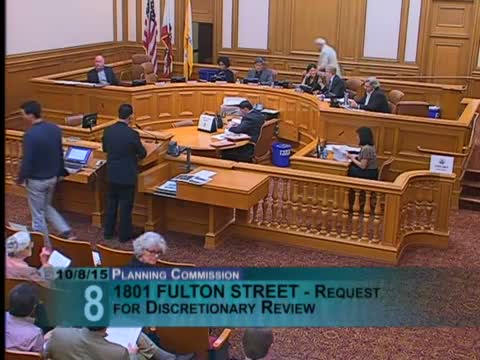
The Planning Commission on Oct. 8 voted 6–0 not to take discretionary review of a proposed Verizon micro‑wireless facility at 1801 Fulton, allowing the carrier to proceed under an accessory‑use building permit reviewed by Planning staff.
Planning staff said the proposed microfacility — three antenna elements disguised inside an 18‑inch faux vent pipe, roof‑mounted equipment enclosures about the size of briefcases, and a ground‑level equipment cabinet — is smaller and produces lower ERP (about 2,400 watts) than a typical macro facility. Staff described prior neighborhood controversy at this location in 2007 and said past carriers voluntarily withdrew proposals rather than pursue permits; staff recommended allowing the accessory‑use process to continue for this application.
Neighborhood speakers and a Doctor requester, Henry Tang, urged discretionary review. Tang referenced a 2007 negotiated outcome in which a carrier removed an earlier facility at the same address and argued that approving the Verizon site would contravene the spirit of that agreement, generate RF exposure for residents beneath the antenna, and create a precedent that would lower the building’s preference ranking in the city’s wireless siting guidelines. Speakers asked the Commission to require additional third‑party RF evidence tailored to the adjacent apartment and to deny the permit.
Verizon’s project sponsor presented third‑party RF reports (Hammett & Edison) reviewed by the Department of Public Health and argued the proposal complies with FCC exposure limits and Planning Code accessory‑use criteria. The sponsor said alternative sites had been considered and were unavailable.
Commissioners debated history and process but concluded the revised neighborhood notification rules, Public Health review of RF studies and accessory‑use criteria supported allowing the project to proceed without discretionary review. Commissioner Antonini moved to not take discretionary review and approve (seconded by Commissioner Johnson); the motion passed unanimously 6–0.