Get Full Government Meeting Transcripts, Videos, & Alerts Forever!
Get email alerts on the Telecom Infrastructure topic
No spam. Unsubscribe anytime.
Board of Appeals upholds permit for AT&T small cell at 2 Vista Verde Court
Summary
The San Francisco Board of Appeals denied an appeal of a Public Works approval for a small cell antenna at 2 Vista Verde Court, finding city departments followed Article 25 review. Neighbors argued the installation would cast damaging shading on older solar panels and harm views; the board voted 5–0 to uphold the permit.
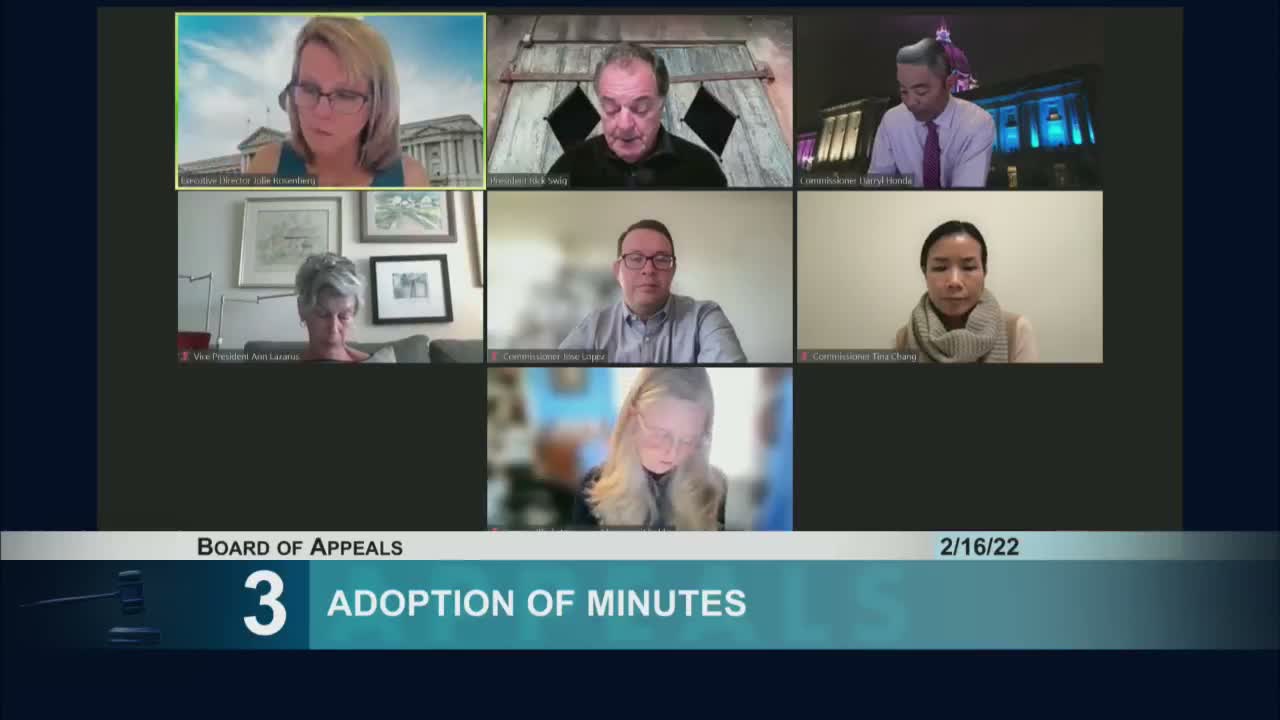
The San Francisco Board of Appeals voted 5–0 on Feb. 16, 2022 to deny an appeal of a Public Works permit that authorizes AT&T to extend an existing utility pole and mount a small‑cell antenna at 2 Vista Verde Court.
Appellants raised concerns about solar shading and neighborhood character. Mark Dutko (appellant) told the board that a shadow analysis supplied by the permittee understated both the duration and the area of shading and that the proposed pole extension would reduce output and possibly damage his older string‑inverter solar system. Several neighbors said the taller pole and added equipment would impair bay views and alter the character of the RH1 district.
AT&T’s representative, Cammie Blackstone, and vendor Modus told the board the company had conducted an alternatives search, obtained third‑party shadow and radio‑frequency reports and followed the city’s notification requirements. She said the antenna is less than 10 inches in diameter, the pole extension meets CPUC General Order 95 requirements and the planning and public‑works reviews concluded the installation would be minimally visible and within Article 25 standards.
Leo Palacios of Public Works confirmed the agency followed Article 25 referral and review procedures. Deputy Zoning Administrator Tina Tam said the Planning Department found the design “on balance consistent” with Article 25 and the General Plan and that the project did not trigger a discretionary shadow analysis under Planning Code rules.
Several commissioners probed whether Article 25 addresses future rooftop solar and whether the board should seek a city‑attorney opinion; Deputy City Attorney Brad Russi said the Board’s review is constrained to Article 25 compliance and he found no code provision that directs review of solar‑panel impacts. After deliberation the board concluded the permit complied with the applicable local standards and upheld the approval.
The board’s decision preserves the departmental approvals but leaves open avenues for appellants to pursue any administrative rehearing or to seek legislative changes to Article 25 if they wish to press the solar‑impact issue further.