Get Full Government Meeting Transcripts, Videos, & Alerts Forever!
Get email alerts on the Evictions Rent Board topic
No spam. Unsubscribe anytime.
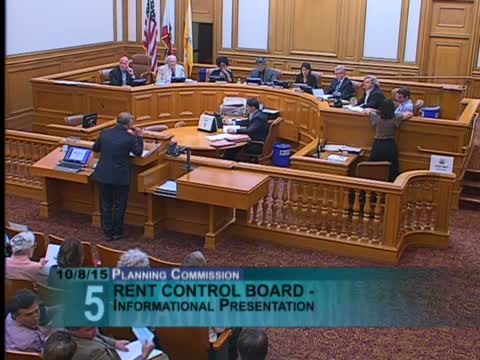
Rent Board briefs Planning Commission on eviction notices, data limits and relocation rules
Summary
The San Francisco Rent Board on Oct. 8 told the Planning Commission it collects eviction notices (not final evictions), tracks owner‑move‑in and Ellis Act filings specially, and is starting to report buyouts; staff warned data gaps mean notices do not equal unit loss.
Robert Collins, deputy director of the San Francisco Rent Board, told the Planning Commission on Oct. 8 that the Rent Board’s work centers on collecting and adjudicating eviction notices and petitions, but that those numbers do not map neatly to permanent losses of housing.
Collins said the board’s mandate covers buildings generally built before June 13, 1979, and that the Rent Board tracks petitions for unlawful rent increases, substantial decreases in housing services and a range of eviction‑related filings. He emphasized the agency records notices filed by landlords — including three‑day nonpayment notices that are not always filed with the Rent Board — and that being served with a notice does not necessarily mean a tenant was evicted.
The Rent Board highlighted two categories that require additional tracking: owner‑move‑in (OMI) evictions and withdrawals under the Ellis Act. Collins explained these filings trigger recorded constraints on the title — three years for OMI in most cases and five years commonly for Ellis Act withdrawals — and may carry different reporting requirements. He said OMI and Ellis Act notices are subject to more involved recording and, for Ellis Act returns to the rental market, a vacancy‑control regime that can make analysis of “loss of units” complex.
Commissioners pressed Rent Board staff for details on recent trends. Collins said the board was reporting roughly 2,200 eviction notices in the 2014–15 fiscal year and that no single data series captures buyouts, informal departures, or the distinction between legal and illegal dwelling units. He confirmed buyouts were newly reportable as of March 7 and that future reports will include that information. On whether demolition or removal figures included illegal/unpermitted units, Collins and Planning Department staff said much of the removal appears to be of unpermitted units that still generate notices but do not trigger Planning Commission review under Section 3.17.
Commissioners asked about the cost‑of‑living index used to calculate allowable rent increases; Collins said the Rent Board uses 60% of the Bay Area CPI‑U. He also described the board’s role in counseling (about 30,000 call center calls annually), mediation and administrative hearings, noting roughly 2,000 petitions are processed each year.
Collins warned against treating the Rent Board’s eviction‑notice counts as direct measures of housing loss and urged caution when comparing trend periods. He said the board would work with the Planning Department to provide clearer charts and, where possible, more accessible summary data for commissions and the public.