Get Full Government Meeting Transcripts, Videos, & Alerts Forever!
Get email alerts on the Transportation Fee topic
No spam. Unsubscribe anytime.
City staff previews Transportation Sustainability Program and proposed TSF fee; public debate centers on impacts for eastside neighborhoods
Summary
Planning staff outlined a three‑part Transportation Sustainability Program — CEQA reform to VMT, a TDM menu for developers and a new Transportation Sustainability Fee (TSF) — proposing roughly $7.74/sq ft for market‑rate residential projects and projecting $1.2 billion over 30 years; neighbors pressed for more outreach and targeted spending for areas already strained by development.
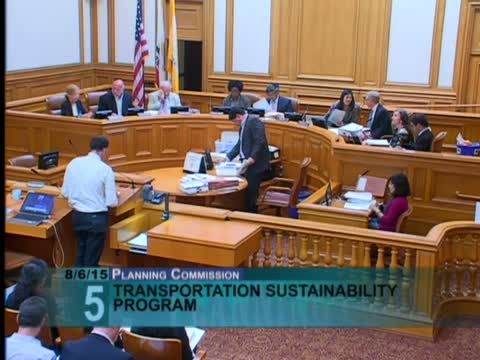
City planning staff on Aug. 6 delivered a detailed briefing on the Transportation Sustainability Program, a package of policy changes and fees officials say are needed to fund transit capacity and to change how the city evaluates transportation impacts under CEQA.
In a presentation to the Planning Commission, Wade Wykreff and colleagues summarized three pillars of the effort: replace the longstanding Level‑of‑Service metric under CEQA with a vehicle‑miles‑traveled (VMT) standard (in response to Senate Bill 743), create a firm Transportation Demand Management (TDM) menu of onsite measures developers must implement, and expand the city’s existing transit impact fee into a new Transportation Sustainability Fee (TSF) on market‑rate residential development.
"By making this change at the state level, it will improve the environmental outcomes of both land use and transportation projects," Wykreff told the commission, explaining the shift from LOS to VMT and the rationale for the change (staff presentation, Aug. 6).
Lisa Chen of the Planning Department said initial economic feasibility work shows the city could justify a TSF of about $7.74 per square foot of market‑rate residential area — roughly $9,200 for the average unit — and about $18.04 per square foot for nonresidential projects. The department presented a 30‑year projection of roughly $1.2 billion in transportation revenues if the program is adopted, of which about $400 million would be new funds to expand and upgrade transit and complete streets.
Neighbors and community groups at the hearing pushed staff for more time, asking for clearer analyses of where TSF revenues would be spent and how smaller, neighborhood‑serving businesses and low‑income communities would be protected. Speakers from Potrero Hill and the Eastern Neighborhoods said pipeline housing already strains local roads and transit; Isabel (public commenter) noted local transit studies showing intersections at failing grades and urged commissioners to target money to affected corridors.
The Planning Department said the TSF proposal will be before the Board of Supervisors in September and that the other elements of the TSP will follow in later hearings. Staff said the TSF includes grandfathering for projects in the pipeline and exemptions for affordable housing, small nonprofits and smaller projects. Victoria Weiss of the SFMTA told commissioners that the agency is studying how shared mobility and private shuttles factor into the nexus research and that coordination between agencies will be required to deliver prioritized improvements rapidly.
Next steps: staff will return with ordinance language and more detailed outreach materials before the Board of Supervisors takes up the fee. Commissioners asked staff to provide neighborhood‑level scenarios showing how TSF dollars would accelerate projects in heavily impacted areas.
Sources: Planning Department presentation and Q&A, Aug. 6, 2015; department staff figures and feasibility study data quoted at the hearing.