Get Full Government Meeting Transcripts, Videos, & Alerts Forever!
Get email alerts on the Land Use Central Soma topic
No spam. Unsubscribe anytime.
Planning staff says Central SoMa rezoning could yield up to $2 billion for public benefits; community warns of trade-offs
Summary
Planning Department staff presented a preliminary financial-feasibility analysis showing Central SoMa upzoning could generate as much as $2 billion in public benefits, while community groups urged prioritizing historic preservation, displacement protections and culturally competent outreach.
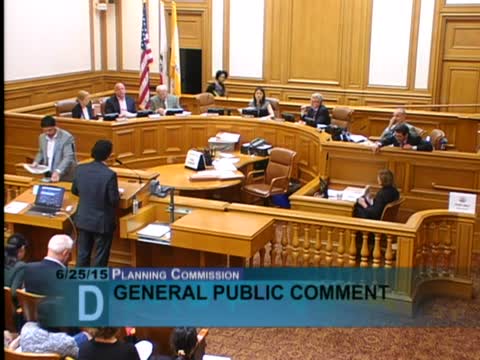
Planning Department staff told the San Francisco Planning Commission on June 25 that rezoning Central SoMa could create billions in land value that the city could capture for public benefits, but speakers and commissioners warned the trade-offs will be steep and must be decided publicly.
"Just based on development requirements alone, we can achieve up to $2,000,000,000 in public benefits in Central SoMa," said Steve Wertheim, project manager for the department. Wertheim and Lisa Chen, who led the financial-feasibility analysis, presented modeling of four prototypical projects and two benefit packages — a baseline and a full community-benefits package. They said the full package in many prototypes exceeded development capacity, requiring scaled-back alternatives.
The staff analysis used land-residual pro formas to estimate value created by rezoning and then tested how much of that value could be captured for housing, transportation, open space, PDR (production, distribution, repair) space, community facilities and historic preservation. "If we threw it all at affordable housing, we get to 3,600 units of affordable housing," Wertheim said, while also noting that doing so would leave less funding for transportation and other priorities.
Speakers at the hearing urged specific priorities. Anthony Verkamp of the National Trust for Historic Preservation said the Old Mint should be a top preservation priority and recommended capturing funds through a Mello-Roos community facilities district or increased TDR allocations. "A restored and reactivated Old Mint must be a part of the legacy of the current economic climate," Verkamp said.
Mike Buehler of San Francisco Heritage echoed that recommendation and cited the state Mello-Roos law allowing rehabilitation funding of public buildings. Community groups including South Of Market Community Action Network and SamCan pressed staff to address displacement risks, to include the SoMa Youth and Family special-use district in analysis, and to ensure outreach is accessible to non‑English speakers.
Commissioners focused questions on the assumptions that drive the pro formas — target developer margins, the city—s choice of 66–75% value capture to leave developers a margin, and legal limits that a nexus analysis or City Attorney review could later constrain. Commissioner Hillis said the analysis is "very sensitive" to small changes in price assumptions and urged staff to be aggressive in capturing value without making projects infeasible.
Staff said the analysis is preliminary and not a set of proposals: "This is the start of the conversation," Lisa Chen said. She and staff outlined three alternative allocations — an affordable-housing focus, a jobs-diversity focus, and an infrastructure focus — each trading off different benefits to stay within a feasible capture range. The department plans further nexus and legal work, focused demand quantification for community facilities, and additional public outreach before any formal proposals are drafted.
The commission did not take a vote on policy changes at the hearing; staff said the draft Environmental Impact Report is expected later and that the analysis and legal vetting will shape subsequent legislative proposals. The presentation and public comments set the stage for months of technical work and community outreach that will determine which mix of housing, transit, preservation and open‑space investments the city can require from future Central SoMa development.