Get Full Government Meeting Transcripts, Videos, & Alerts Forever!
Get email alerts on the Housing Policy topic
No spam. Unsubscribe anytime.
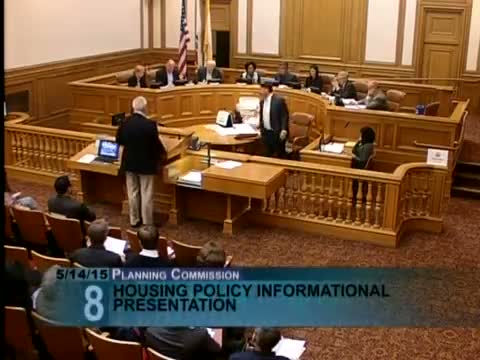
Planning commissioners hear staff briefing on long-range housing strategy as market pressures intensify
Summary
Planning Department staff told the commission the city faces intense housing-pressure dynamics — rapid income growth, high price appreciation and insufficient production — and urged a two-track approach of preserving existing affordable stock while expanding production and regional coordination.
San Francisco — Planning Department staff on Thursday told the Planning Commission that the city’s housing challenge is now driven by unusually strong regional economic forces and requires both local preservation and increased production.
Gil Kelly, director of citywide planning, opened the presentation by urging the commission to treat housing as a long-range policy problem and to coordinate with neighboring jurisdictions. “We are really in an extremely dynamic environment now,” Kelly said, outlining population and job-growth trends that he said were reshaping housing demand.
Kirsten Dissinger, chief housing policy coordinator, summarized actions underway, including regulatory streamlining, a proposed catalyst fund to mobilize affordable-housing finance, and proposed changes to the city’s affordable-housing program to make off-site options and varying affordability targets more workable. “We are starting a conversation about what our city’s housing might look like in 2030 and 2040,” Dissinger said.
Ted Egan, San Francisco’s chief economist in the Controller’s Office, presented the market data the department used to frame the problem: strong demand growth, limited annual supply and rapid price appreciation. “The line there is Zillow’s estimate of housing prices in San Francisco annually, and it’s grown 40% since 2011,” Egan said. He said the city has been adding roughly 2,000–3,000 housing units a year while net population gains averaged about 10,000 per year, producing “a disproportionate” gap between demand and production. Egan also told commissioners his office estimates low‑income households pay about 46% of their income for housing on average, creating a roughly $600 million annual affordability gap in aggregate.
The staff presentation stressed a two‑part strategy: protect and better understand the affordability of existing housing stock, and increase coordinated production of market-rate and permanently affordable housing so the city moves onto a trajectory that stabilizes affordability. Staff suggested follow‑on sessions that would examine specific implementation tools — density bonuses, incentives, inclusionary program adjustments and small‑sites acquisition programs.
Public commenters largely supported the staff framing but pressed for stronger preservation tools and enforcement. Longtime neighborhood activists cited institutional conversions, residential conversions to short‑term rental units and TIC/condo conversions as major drivers of lost affordable units. “We are losing it by the thousands from non‑implementation of policies,” said a frequent commenter who urged more two‑week staff reports and improved access to case materials.
Commissioners used the discussion to sketch next steps. Several members asked staff to produce more neighborhood‑level data on turnover, a study on the causal links between new construction and displacement, and a clearer inventory of rent‑controlled versus vacancy‑decontrolled units. Commissioners also emphasized regional coordination with transit and surrounding cities and suggested convening workshops and a public hearing focused on preservation tools.
The department said it will return with more detailed tool‑level proposals in coming months, including an itemized briefing on conditions-of-approval when projects change ownership and the legal limits on ballot‑season participation by staff and commissioners.