Get Full Government Meeting Transcripts, Videos, & Alerts Forever!
Get email alerts on the Academy Of Art Eir topic
No spam. Unsubscribe anytime.
Planning staff sets Feb. 25 draft EIR release for Academy of Art University; enforcement, legalization of prior uses remain contested
Summary
Planning Department staff told the Planning Commission the Academy of Art University draft EIR is scheduled for publication Feb. 25 with a 60‑day review and an April 16 public hearing; staff also outlined an existing‑sites memorandum to analyze prior, unpermitted uses and described ongoing enforcement and notices of violation against AU properties.
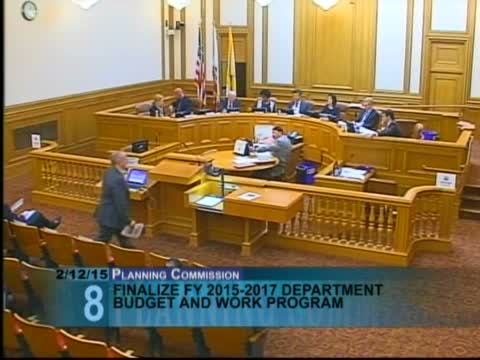
Planning Department environmental staff told the Planning Commission on Thursday that the draft environmental impact report (EIR) for the Academy of Art University (AAU) will be published Feb. 25, beginning a 60‑day public review period that the department plans to follow with an April 16 public hearing.
Chelsea Fordham, environmental planning staff, said the AAU EIR will analyze four components of AAU’s proposed growth, including student housing to serve roughly 400 students at identified project sites, approximately 670,000 square feet of additional institutional space in project study areas, and a project buildout that the department estimates at about 2.7 million square feet. "Publication of the draft EIR is scheduled for February 25," Fordham said. "The AAU EIR will have a 60 day review period." (Chelsea Fordham, Environmental Planning Section.)
Why it matters: the EIR will use September 2010 as the baseline for CEQA analysis and will pair the draft EIR with an "existing‑sites technical memorandum" that staff said will document and evaluate environmental effects from AAU’s operations and any physical changes at sites AAU occupied after the notice of preparation. That memorandum is intended to inform the commission about prior, unpermitted physical changes and to help shape permit conditions if the commission later considers legalization of those uses.
Staff described enforcement steps taken to date: in January 2013 the department issued notices of violation and penalties for 22 properties used by AAU, and later released a stay of penalties tied to progress on the EIR. After slower than expected progress, staff said it released the stay in April and set a penalty accrual date conditioned on the draft EIR schedule. The department reported that some appeals were filed to the Board of Appeals on several of the notices and that AAU has since withdrawn some appeals and made progress on others. Staff said about 19 conditional‑use authorizations and seven building permits will be needed to legalize identified uses.
Commissioners and members of the public pressed staff on how the EIR will treat prior actions and whether a separate institutional master plan should guide review. Commissioner Wu and others clarified that the EIR will treat September 2010 as the CEQA baseline while the existing‑sites memo will document prior operations and evaluate environmental topics such as historic resources, transportation, and housing for the period AAU occupied the properties.
Public speakers — including long‑time neighborhood activists — urged strict enforcement and emphasized neighborhood impacts from AAU’s prior expansion without permits. Planning staff said they will return with responses to comments after the draft EIR review period and, if the EIR is certified, will return with entitlement requests for the commission to consider.
Next steps: draft EIR publication on Feb. 25, 60‑day public comment, responses to comments and later certification hearing (dates to be set).