Get Full Government Meeting Transcripts, Videos, & Alerts Forever!
Get email alerts on the Housing Element topic
No spam. Unsubscribe anytime.
Commission initiates 2014 housing element; public pushes for two-week release of EIR addendum
Summary
Planning Department asked the commission to initiate and schedule an adoption hearing for the 2014 housing element; commissioners approved initiation and set a Feb. 5 hearing provided the EIR addendum is finalized and available to the public two weeks before the hearing.
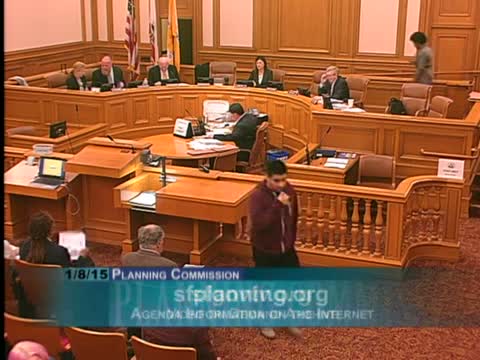
The Planning Commission on Jan. 8 voted to initiate adoption proceedings for the 2014 update to San Francisco's housing element and scheduled an adoption hearing for Feb. 5, contingent on completion of an addendum to the city's 2009 EIR and broader public availability of supporting materials.
Monica Mohan, representing planning staff, told the commission the 2014 element contains selective updates to Part 1 (data and needs analysis) while preserving much of the policy framework from the 2009 element. "The housing element is required by state law," she said, adding that adoption affects eligibility for state housing and infrastructure funding. Audrey Desnuk summarized demographic projections and RHNA targets: San Francisco's current population was stated as roughly 818,000, ABAG projects growth of about 270,000 more residents over 25 years, and the city will need on the order of 100,000 new housing units over the same period.
Public commenters and neighborhood groups urged more time to review an environmental addendum that staff is preparing. Cathy Devincenzi and other community representatives asked the commission to require that the EIR addendum be released at least 14 days before any adoption hearing to allow meaningful review and potential responses; they noted the addendum had not yet been posted to the public packet. The City Attorney's Office clarified that an addendum does not require a separate public hearing under CEQA but must be finalized before the Planning Commission acts; staff said its schedule aims to finalize the addendum by the end of the month and requested the Feb. 5 adoption date as within the state's grace period.
Commissioners discussed the element's implementation and monitoring language, urging stronger metrics and follow-up. Commissioner Johnson asked for more explicit "teeth" in implementation programs, including measurable monitoring and triggers if programs fail to produce expected results. Commissioner Antonini and others supported timely adoption while acknowledging the public's request for access to the addendum two weeks before the hearing.
On a motion to initiate and schedule the adoption hearing for Feb. 5 (with the understanding that the addendum would be provided in advance or the hearing would be continued), the commission voted unanimously 6–0 to set the hearing and begin adoption proceedings. Staff said the Board of Supervisors must ultimately receive the element, and that the Feb. 5 date remains subject to staff producing the addendum in time for public review.