Get Full Government Meeting Transcripts, Videos, & Alerts Forever!
Get email alerts on the Potrero Redevelopment topic
No spam. Unsubscribe anytime.
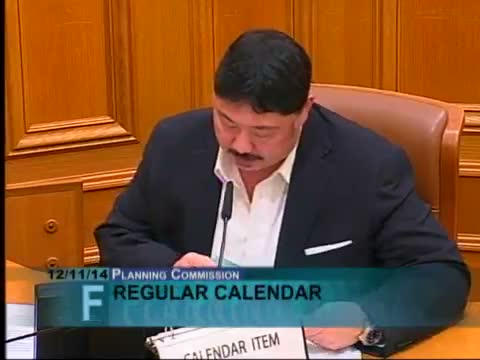
Planning Commission hears public comment on Potrero HOPE SF draft EIR/EIS
Summary
The Planning Commission opened the public hearing on the joint CEQA/NEPA draft EIR/EIS for the Potrero HOPE SF redevelopment, heard hours of resident testimony about density, traffic, construction impacts and replacement housing, and staff extended the written comment deadline to Jan. 7, 2015.
The San Francisco Planning Commission opened a public hearing on the draft environmental impact report and environmental impact statement for the Potrero HOPE SF redevelopment project on Dec. 11, 2014.
Planning Department staff said the joint CEQA/NEPA document covers demolition of the existing public housing on the South Slope of Potrero Hill and proposes replacing about 620 public-housing units with up to roughly 1,700 new residences of mixed incomes, built in multiple phases over about a decade. The draft EIR/EIS lists construction-period impacts—including aesthetics, circulation, noise and vibration, air quality and inadvertent discovery of archaeological remains—and identifies mitigation measures. Staff emphasized that today's hearing is confined to comments on the adequacy of the draft document, not approval of the project.
Residents and stakeholders praised the prospect of new housing and safer, modernized homes for current public-housing residents, but many speakers urged changes. Common concerns included the jump in density from the existing inventory, traffic and transit capacity on narrow Potrero streets, the project's 10-year construction horizon and its temporary impacts, potential asbestos/serpentine-rock risks in grading, lack of precision in locating replacement affordable units within the master plan, and the cumulative effects of concurrent development in the Eastern Neighborhoods and Central Waterfront. Several speakers asked the department to expand the cumulative-effects and transit analyses and to provide clearer phasing and relocation plans for existing residents.
Bridge Housing and the Mayor's Office of Housing and Community Development representatives described ongoing outreach, the project's multi-phase construction approach and planned mitigation. Staff said the Historic Preservation Commission asked that the project sponsor document site history before demolition. Planning staff also noted the public review period opened Nov. 7 and that written comments will be accepted through 5 p.m. on Jan. 7, 2015. The commission did not take an action on project approval at the hearing; it accepted public testimony for the administrative record.
What happens next: the Planning Department will receive public comments through Jan. 7, then prepare written responses and any revisions to the draft before the commission considers certification and any required approvals.