Get Full Government Meeting Transcripts, Videos, & Alerts Forever!
Get email alerts on the Homeless Services topic
No spam. Unsubscribe anytime.
Planning Commission approves Diamond Youth Shelter’s request to operate 24/7 with neighborhood conditions
Summary
The Commission approved Larkin Street Youth Services’ request to modify its conditional‑use permit and operate the Diamond Youth Shelter 24 hours a day, subject to conditions referencing the operator’s written operations plan, a neighborhood liaison, and a six‑month written report back to the Commission.
The Planning Commission approved a modification to the Diamond Youth Shelter’s conditional‑use authorization on Oct. 23, allowing Larkin Street Youth Services to operate the underage emergency youth shelter 24 hours a day to comply with evolving federal and state licensing requirements. The decision followed a lengthy public record that included both strong neighborhood support and vocal opposition.
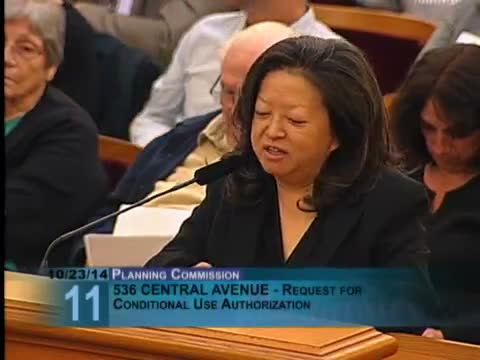
Sherilyn Adams, executive director of Larkin Street Youth Services, told the Commission that federal and state funders now require some shelter services to be co‑located and operate continuously. "The shelter serves youth up to the age of 17," Adams said. "Federal and state guidance has clarified that they want those services to be 24/7 in one location." Adams and shelter staff outlined measures adopted after neighborhood outreach: a revised operations plan, an ongoing community meeting schedule, an on‑site facility manager to serve as a neighbor point of contact, and staff training.
Denise Jimenez, Diamond’s assistant manager, described on‑site strategies to reduce impacts: a staff presence in afternoons and evenings so neighbors have a consistent face; hourly block walks and camera monitoring of the front; and an expectation that young people be quiet and inside by 9 p.m. "We communicate with neighbors via email and flyers and we're committed to being good neighbors," Jimenez told commissioners.
Supporters — including city homelessness staff, Firefighters Local 798, the Youth Commission, Larkin volunteers and current and former clients — urged approval, saying 24/7 operation helps reduce street congregations, enables better case management and improves youth outcomes. Opponents from the immediate block cited previous promises about hours when the building was rebuilt, concerns about loitering, noise and the cumulative concentration of social‑service settings on the block.
Commissioners debated operational limits, occupancy and monitoring, and sought enforceable commitments: the approved motion references the shelter’s written operations manual as a finding (rather than a codified condition), requires the sponsor to provide a written status report to the Commission in six months, and records neighborhood commitments including a liaison and agreed operational practices. The Commission recorded a unanimous approval vote (4–0 among eligible members after recusals), with the action explicitly noting outreach and an expectation that staff enforce conditions and follow up.