Get Full Government Meeting Transcripts, Videos, & Alerts Forever!
Get email alerts on the Planning Code topic
No spam. Unsubscribe anytime.
Neighborhood groups press Planning Commission for more outreach on Article 2 code rewrite
Summary
Neighbors, business associations and commissioners raised process and clarity concerns about a 460‑page Article 2 rewrite of the San Francisco Planning Code; the Commission voted to continue the item for additional outreach and clarification.
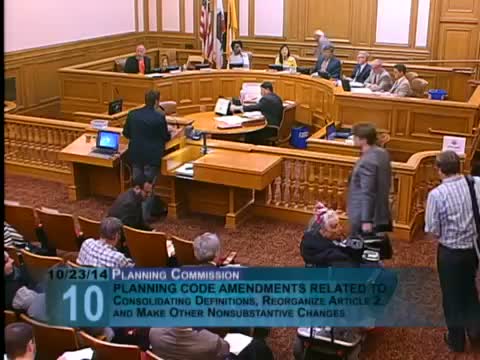
The Planning Commission on Oct. 23 pushed the department’s Article 2 Planning Code reorganization — a Phase 1, 460‑page proposal to consolidate use definitions and convert use tables into zoning control tables — to Nov. 20 after hours of public comment pressing for more outreach and clearer redlines.
Planning Department legislative manager Aaron Starr told the Commission the draft seeks to reorganize Article 2 for clarity and to avoid substantive changes where possible. "Most of these uses in the code are accounted for in each district now," Starr said during the staff presentation, framing the proposal as primarily structural.
Neighborhood groups and dozens of speakers — from the Coalition for San Francisco Neighborhoods, Cow Hollow and Sunset Parkside to single‑homeowner associations — said the rewrite is effectively changing what is permitted across the city and demanded more time, clearer comparisons with current code and longer neighborhood meetings. "This is changing the definition of what is allowed in zoning throughout the city and should require citywide notice," said Greg Scott of the Pacific Heights Residents Association.
Speakers cited examples of potentially altered use definitions (student housing, SROs, group housing and institutional uses) and asked for a continuance so staff could provide side‑by‑side redlines and meet neighborhood groups. Several speakers requested a six‑week continuance; commissioners debated a four‑week vs. six‑week extension. One commissioner characterized much of the public concern as a need for education rather than substantive change; another called for a structured outreach session in the continuation period.
After debate the Commission voted to continue Article 2 for four weeks with dedicated outreach, an expectation that staff publish clear change summaries and a promise to focus continuance meetings on answering specific neighborhood questions. The motion passed with Commissioners Antonini, Hillis, Richards and others supporting the continuance and a target return date of Nov. 20.
Commissioners and staff said further phases will come back in sequence so that the city can integrate other pipeline ordinances into the revised structure. Planning staff emphasized that future amendments will be handled as discrete items and that the Nov. 20 session should produce a compact list of substantive concerns for staff to address.
The continuation ensures more public process before substantial reorganization of Article 2 advances to the Board of Supervisors.