Get Full Government Meeting Transcripts, Videos, & Alerts Forever!
Get email alerts on the Ppts Exela topic
No spam. Unsubscribe anytime.
San Francisco staff set Dec. 8 launch for unified permit system, stress data migration and training
Summary
City planning and building officials told joint commissions they will replace legacy permit systems with a single Exela-based platform and a public Citizen Access Portal, aiming for a phased go‑live beginning Dec. 8 while stressing data migration, staff training and outreach are critical to success.
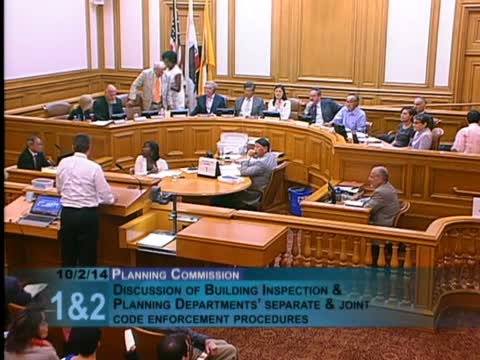
City planning and building officials told the Planning Commission and the Building Inspection Commission on Thursday that the city will replace separate, decade‑old permit systems with a single platform (Exela) and a public Citizen Access Portal intended to give residents searchable, up‑to‑date access to permit and enforcement records.
"We are commit to reach the December 8 roll out day," Henry Bartley, project manager with the Department of Technology, said during the joint hearing, while acknowledging that "data conversion" and other technical challenges remain. Bartley said the switch will consolidate multiple legacy systems into one master data source to reduce handoffs and confusion between departments.
Glenn Cabarrus, the Planning Department’s project business lead on the Acceler (PPTS) project, demonstrated mockups of the Citizen Access Portal. He said the portal will allow any internet user to search permit and entitlement records and allow registered users to see additional processing detail, apply online for certain permits and file a single enforcement complaint that staff will triage to the appropriate division.
Project staff outlined the final steps before launch: a focused data‑migration effort to move legacy records into Exela, a staff training program (DBI training scheduled in November), and a public‑outreach campaign led by DBI and Planning staff. Bartley said training and outreach would be phased, with department training first and outreach ramping up after both departments are live on the platform.
Commissioners asked for specific transparency features. Lehi Cabrera (Planning staff) and Cabarrus said the portal will integrate with the department’s existing property information map (PIM), provide GIS search features, link to uploaded decision documents, and capture an audit trail showing when staff or applicants touched a record so the public can generate delay and status reports.
Several members of the public and commissioners urged caution. Alan Grossman, speaking during public comment, criticized project costs and said the PPTS contract “started almost 3 years ago on a $3,000,000 contract” and has “more than doubled” to “almost $7,000,000” with an additional $2,000,000 in the budget, a claim staff did not dispute at the hearing. Other commenters urged the system be able to track enforcement follow‑through on conditions of approval such as street‑tree plantings.
City staff said the system will expose much of the back‑end data as public records, while some fields may be gated to registered users for security reasons. Staff also said the system will allow the public to submit targeted complaints tied to specific project conditions (for example, missing street trees) and funnel them to the correct enforcement unit.
The departments plan a phased rollout and a one‑year review of performance and enforcement implications to determine whether additional resources or fee adjustments are needed. Staff said outreach to the public will occur after the departments are live on Exela and that the code‑enforcement tab will provide a single point for complaints going to Planning or DBI.
Next procedural steps: intensive data migration, final staff trainings, the public outreach schedule, and monitoring of early use—staff will report back to commissions after the system has been in operation to evaluate whether the portal and the audit trail are delivering the transparency and enforcement benefits described at the hearing.